
Mostdomain – Fixed supply meets growing demand. That’s the short version of a long answer. A regular domain renews for ten to twenty dollars a year. Premium ones? Thousands. Sometimes millions. The gap looks absurd at first glance. Look closer, though, and you see what’s actually priced in. Factor by factor, here’s what you’re really paying for.
What Makes a Domain Premium?
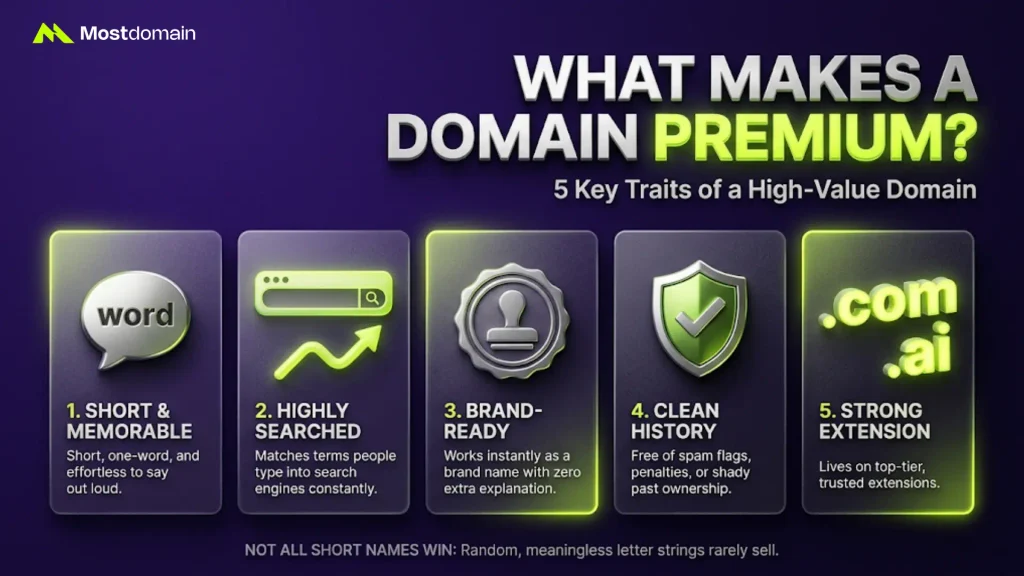
Five traits usually decide whether a domain counts as premium. Rarity tops the list, every time.
- Short, one word, nothing to stumble over saying it out loud
- Matches a term people type into Google constantly
- Could work as a brand name with zero extra explanation
- No spam flags, penalties, or shady ownership history attached
- Lives on a strong extension, usually .com, sometimes .ai
Not every short name clears that bar, though. Random letters with no real meaning rarely sell for much. Scarcity, memorability, and buyer interest all have to show up together. Missing even one usually tanks the price. For a deeper breakdown, our premium domain names guide covers it.
What Factors Actually Drive Premium Domain Pricing?
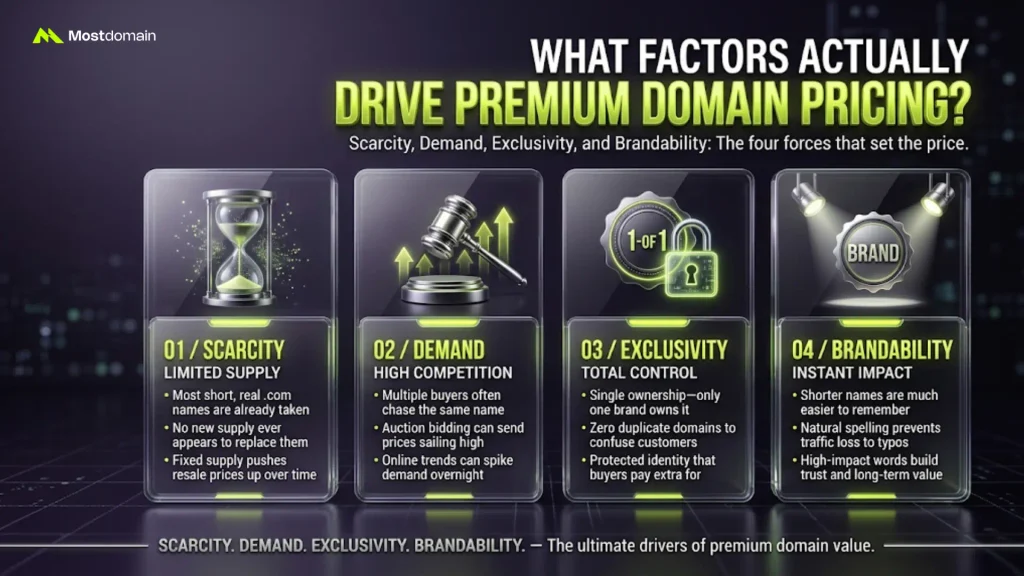
Scarcity. Demand. Exclusivity. Brandability. Four forces, and together they explain nearly every premium price tag.
| Factor | Why It Pushes the Price Up |
| Scarcity | Short, real-word .com names are nearly gone, and no new ones get made |
| Demand | Several buyers chasing one name at once, sometimes in the same week |
| Exclusivity | Only one business can own that exact string, full stop |
| Brandability | Clear, short words stick in memory and build trust faster |
Domain Name Scarcity and Limited Supply
The biggest reason prices climb? Scarcity. Only one buyer can hold a given domain at a time. Not two, not a group.
- Most short, real-word .com domains are already registered
- Once a word gets taken, no new supply appears to replace it
- Fixed supply like that pushes resale prices up, year after year
Domain Name Demand and Competition
Picture five agencies bidding on the same four-letter .com. That scramble alone can double the eventual price.

- Startups, agencies, and investors often chase the exact same name
- Auctions can send prices sailing well past the opening bid
- A niche trending online can spike demand almost overnight
Domain Ownership Exclusivity
No near-duplicate exists once you own a domain outright. One brand, one name, no copies floating around to confuse customers.
- Total, unshared control goes to whoever owns the name
- No lookalike domain quietly siphons off your traffic
- That protected identity is exactly what buyers pay extra for
Length, Clarity and Brandability
Shorter and clearer just sells for more. People remember these names without even trying to.
- A five-letter .com domain usually beats a twelve-letter one on resale
- Easy spelling means fewer visitors lost to typos
- Clean, brandable words raise long-term resale value, often by a lot
Premium Domain vs Regular Domain: What’s the Real Difference?
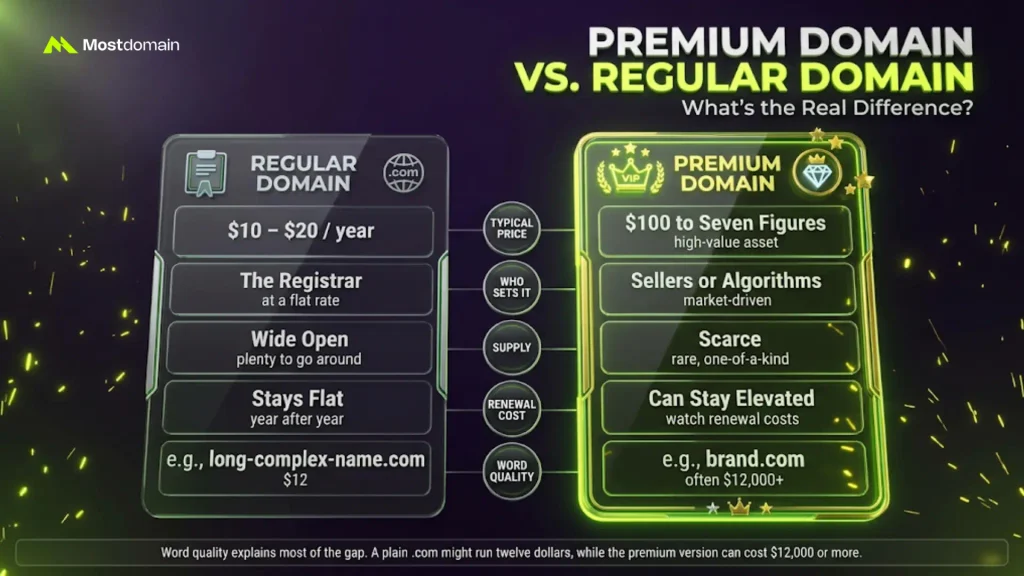
Ten dollars versus ten thousand, sometimes far more. That’s the real gap between a regular and a premium domain.




| Factor | Regular Domain | Premium Domain |
| Typical price | 10–20 per year | $100 to seven figures |
| Who sets the price | The registrar, at a flat rate | Either a registry algorithm or a private seller |
| Supply | Wide open, plenty to go around | Scarce, sometimes truly one-of-a-kind |
| Renewal cost | Stays flat, year after year | Can stay elevated too, which catches people off guard |
Word quality explains most of that gap. A plain .com might run twelve dollars outright, nothing fancy. The premium version of that same word? It can run $12,000 or considerably more, depending on the niche.
Registry Premium vs Aftermarket Premium Domains
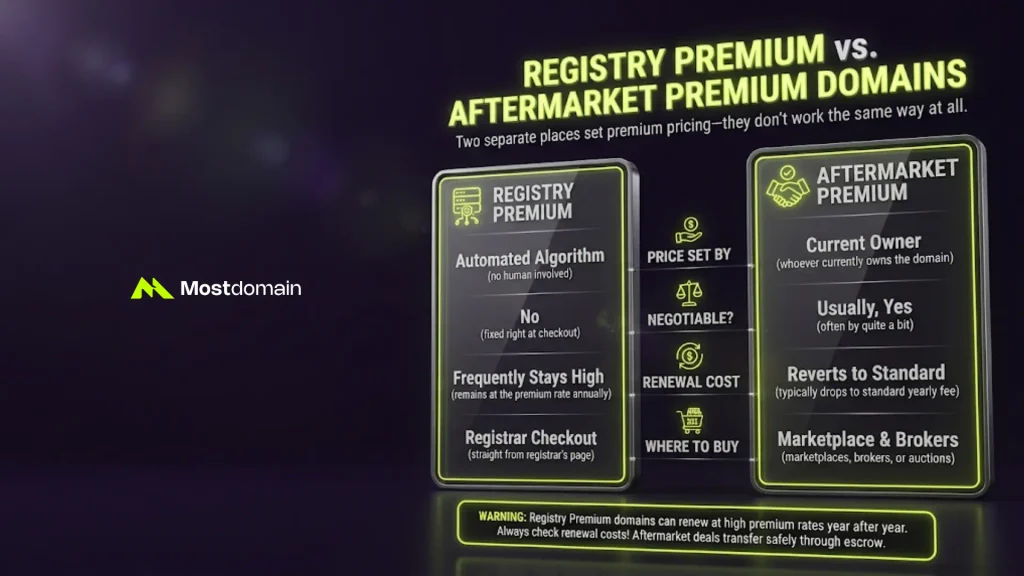
Two separate places set premium pricing. They don’t work the same way at all.
| Aspect | Registry Premium | Aftermarket Premium |
| Price set by | An automated algorithm, no human involved | Whoever currently owns the domain |
| Negotiable? | No, fixed right at checkout | Usually, yes, and often by quite a bit |
| Renewal cost | Frequently stays at the premium rate | Usually reverts back to the standard rate |
| Where to buy | Straight from the registrar’s checkout page | A marketplace, a broker, or an auction |
Here’s the detail that trips people up. Registry premium domains can keep renewing at that same high rate. That happens every year, not just at checkout. Always check the renewal cost before committing.
Aftermarket deals run on different rails entirely. They move through the domain aftermarket, never off a registrar’s shelf. A trusted marketplace like MostDomain backs these sales with secure escrow services. Your money and the domain both transfer safely that way.
How Much Do Premium Domains Typically Cost?
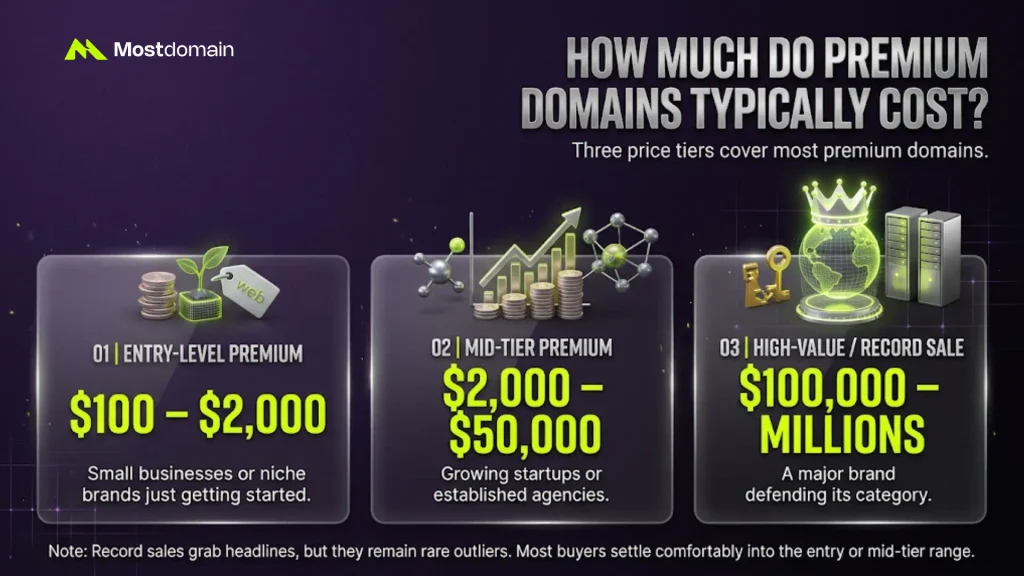
Three rough price tiers cover most premium domains.
| Tier | Typical Price Range | Example Use Case |
| Entry-level premium | $100 – $2,000 | A small business or a niche brand just getting started |
| Mid-tier premium | $2,000 – $50,000 | A growing startup or an established agency |
| High-value / record sale | $100,000 – millions | A major brand defending its category |
Record sales grab headlines, but they stay genuinely rare, outliers more than norms. Most buyers settle comfortably into the entry or mid-tier range instead. In a competitive niche, an exact match domain usually costs more. Sometimes a lot more.
Is Buying a Premium Domain Worth the Investment?
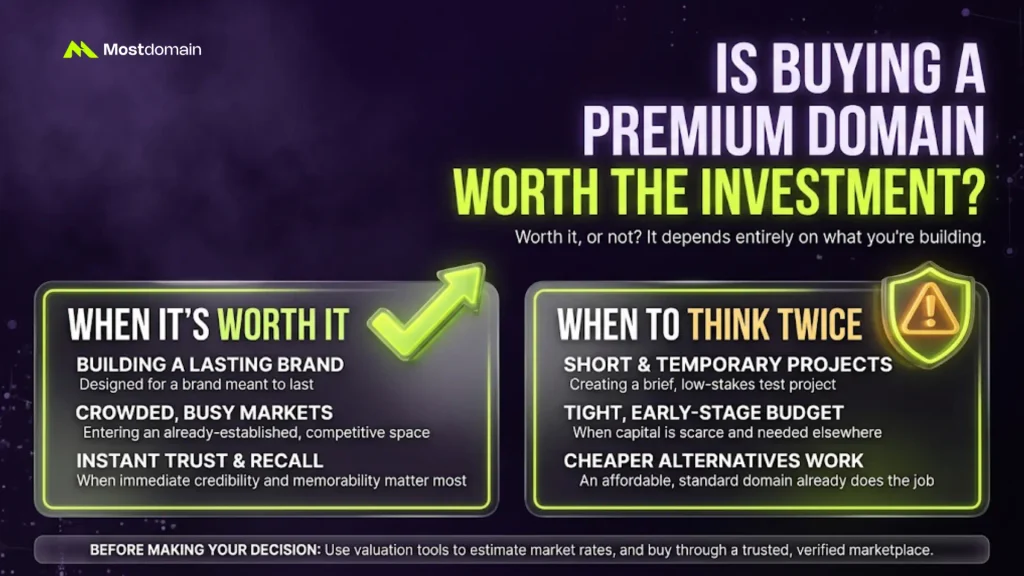
Worth it, or not? Depends entirely on what you’re building.
- Worth it: you’re building a brand meant to last
- Worth it: you’re entering a crowded, already-established market
- Worth it: instant trust and recall actually matter to you
- Think twice: this is a short, temporary test project
- Think twice: your budget is tight and early-stage
- Think twice: a clearly cheaper alternative already does the job
Before deciding, run the basics first. Domain valuation tools can tell you roughly where a name sits in the market. Buying through a reputable marketplace lowers your risk too. MostDomain vets every listing and verifies ownership before any sale. Once you’ve chosen a name, the team helps you buy a domain name permanently.
FAQ
Are premium domains always worth the price?
Not always, and that’s the honest answer. It depends on your brand, market, and growth plans. Not just the price tag.
Can you negotiate a premium domain price?
Aftermarket prices, yes, often room to negotiate there. Registry premium prices tend to be fixed and final instead.
Do premium domains rank better in Google?
No direct ranking boost comes with a premium domain. What it mainly improves is click-through rate and brand trust.
Is a cheaper alternative domain just as effective?
Sometimes, honestly. A clear, brandable alternative works just fine. Especially when the exact match sits outside budget.
Scarcity, demand, and exclusivity, working together, set premium domain pricing. Once those factors click, judging a fair price gets easier. One thing worth remembering: real cost builds up over years, not just at checkout. Weigh renewal terms as carefully as the sale price itself. When you’re ready to buy, go through a trusted marketplace. MostDomain keeps the whole process safer, and by a wide margin more transparent.
References
- GoDaddy, Understanding Premium Domain Names
- Verisign, The Economics of Domain Name Scarcity
- NameBio, Historical Domain Sales Data
- DAN.com, How Aftermarket Domain Pricing Works