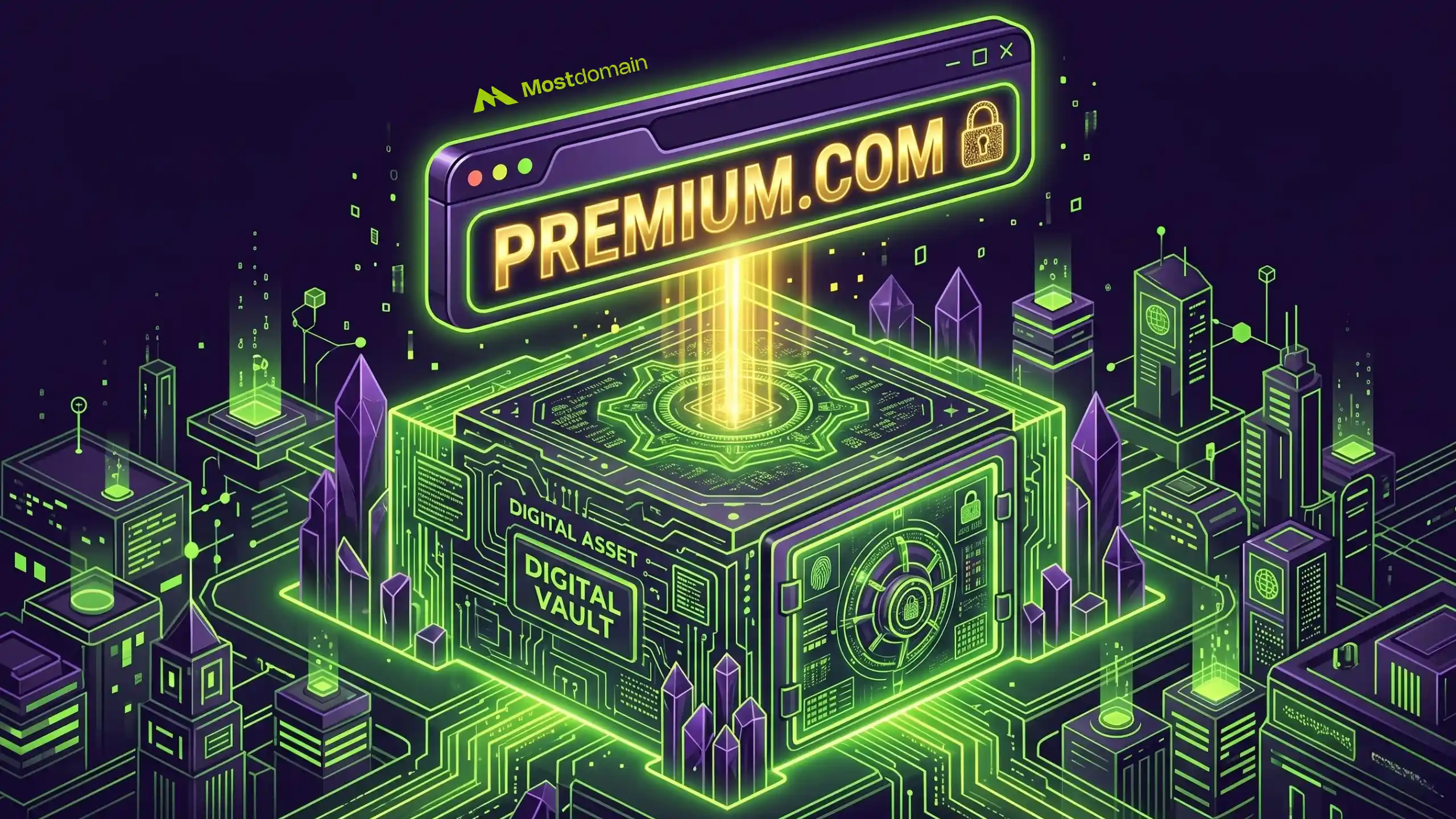
Thirty million dollars. No office buildings, no warehouse inventory, zero physical assets. Just a five-letter word sitting in a web browser. When Block.one wired that exact amount for Voice.com in 2019, the tech world paused. How does an invisible string of characters become the most valuable domain name on the planet?
It comes down to one thing: raw brand authority. Let’s dig into the actual trivia behind the heaviest domain acquisitions in history and decode exactly why the buyers happily paid a absolute fortune to secure them.
The most expensive domain sales
Getting the real numbers on digital buyouts is notoriously tough thanks to ironclad NDAs. But if we look strictly at verified, cash-for-domain deals, the history books show a few legendary transactions. Here is the trivia behind why these specific names broke the bank:
Voice.com: $30 Million (2019)
Here is a wild piece of trivia: MicroStrategy (yes, Michael Saylor’s company) was casually sitting on this gem for years. Block.one was gearing up to launch a massive social media network. They didn’t just want a clever startup name; they needed absolute, unshakeable dominance. “Voice” dictates authority. It implies you are the definitive platform for speaking online. That level of instant global recognition is exactly why they handed over thirty million dollars.
360.com: $17 Million (2015)
Telecom giant Vodafone originally owned this number string. Chinese software titan Qihoo 360 desperately needed it to unify their corporate identity. Why was it worth $17 million? In Asian markets, numeric domains are king because they transcend regional dialects. The number ‘360’ universally implies complete, full-circle security. Qihoo didn’t just buy a URL; they bought an unshakeable cultural authority.
NFTs.com: $15 Million (2022)

Timing is literally everything. An anonymous buyer grabbed this right at the absolute peak of the Web3 bubble. Why drop fifteen million on an acronym? Think about it. If you hold the exact abbreviation everyone is obsessing over, you instantly own the conversation. Every other competing platform suddenly looks like a backup option simply because they missed out on that exact web address.
Sex.com: $13 Million (2010)
The backstory is like a Hollywood script. It was famously hijacked by a con man in the 90s, triggering a brutal decade of legal wars that eventually dragged in the Supreme Court. When Escom LLC finally sold it to Clover Holdings, the astronomical price tag simply reflected its status. It is arguably the most heavily trafficked, high-intent dictionary keyword in existence.
Fund.com: $9.99 Million (2008)
Wall Street money moves differently. A firm bought this to act as a definitive financial portal. Even though the business itself eventually imploded spectacularly, the initial logic behind the valuation was rock solid. “Fund” is the ultimate authority keyword in a multi-trillion dollar sector.



What makes a domain this valuable
A domain reaches these staggering valuations for one simple reason: it delivers instant, undisputed brand authority. Buyers at this level aren’t crunching traffic numbers or running complex algorithms; they are buying the throne of their industry based on three core factors:
Sheer Brandability
This is the magic behind an iconic sale like Voice.com. The word is heavy. It commands the room. You never have to spell it out for a client over the phone, and literally nobody forgets it after seeing it on a billboard.
Absolute Keyword Value
Look at this through the lens of Fund.com or NFTs.com. These aren’t just clever descriptions; they are the entire industry sector. Owning the exact dictionary term hands a company an unshakeable perception of market leadership right out of the gate.
Scarcity and Memorability
This angle is perfectly illustrated by 360.com. Digits simply do not require translation. An ultra-short numeric address is universally understood across the globe, which instantly makes it one of the rarest digital commodities on earth.
The 4-letter / short .com scarcity angle
The extreme scarcity of a 4-letter .com comes down to one brutal reality: the supply is mathematically locked and completely sold out. Investors aggressively hunt for a premium domain simply because:
A hard mathematical wall
Crunch the English alphabet into four-letter strings, and you get exactly 456,976 unique combinations. Not a single one more.
Absolute zero availability
Every single one of those addresses vanished from the open registry decades ago. You literally cannot mint or manufacture new ones.
The landlocked real estate effect
Short, pronounceable four-character URLs operate exactly like prime property in a city with no room to expand. Since the supply is permanently capped, the global scramble among new brands guarantees the value of these scarce assets keeps climbing.
A light takeaway for aged-domain buyers
The ultimate takeaway for anyone investing in an aged domain is that legacy digital assets act as a direct, unforgeable shortcut to market trust. Buying into an established name gives you three massive advantages:
- Inherent gravity: The core reality does not change whether you are chasing an iconic dictionary word or hunting down a highly brandable aged domain. Legacy assets simply carry serious weight.
- A unique digital fingerprint: Securing an established address means you are literally adopting a piece of internet history that no competitor can ever replicate.
- Instant big-league proof: Ultimately, showing up to the market with a premium address is the absolute fastest, most effective way to bypass the startup static and prove you belong at the top.
FAQ
What is the highest price ever paid for a domain name?
If we restrict the criteria strictly to verified cash transactions for the domain itself, Voice.com retains the crown following its $30 million buyout in 2019. Reports of $872 million for Cars.com exist, but those valuations wrap up the entire enterprise and physical assets, not solely the URL.
Why do short .com names cost so much?
It boils down to a finite supply constraint. The total pool of three and four-letter combinations is mathematically locked. Because the original registrations happened years ago, buyers must negotiate with current holders. That absolute scarcity dictates the exorbitant pricing.
Are domains actually considered digital assets?
Yes. Serious investors treat premium URLs identical to commercial real estate. Portfolios are built, held, and liquidated for profit, while major corporations park funds in them to secure their brand moat.
How can you tell if a domain name is worth money?
Elite valuations follow strict patterns. The heaviest hitters almost exclusively use the .com extension, maintain an ultra-low character count, and rely on dictionary nouns or undeniable, industry-defining terminology.
Do people care about domain extensions other than .com?
While .com retains the undisputed championship belt for resale liquidity, alternatives carry genuine weight. AI startups fiercely acquire .ai and .io extensions, whereas localized businesses lean heavily on regional codes like .co.uk or .de to establish domestic authority.
References
- Financial Times, report on the AI.com sale (2026)
- Wikipedia, List of most expensive domain names
- DN Journal, recorded domain sales
- Name.com and GoDaddy domain sales reports