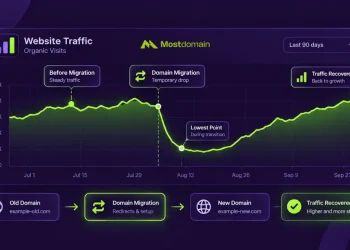

Selling a well-aged name is more about process. An aged domain carries history that buyers will pay for. But only if you put it in front of the right people. With the right price and close the handover without spooking anyone. This guide walks the full path, from first listing to final transfer. If you are still fuzzy on what actually counts as one, the what is an aged domain explainer covers the definition. Here we assume you already own a name worth moving.
How to Sell an Aged Domain
To sell an aged domain, you work through four moves:
- list it where buyers already search
- price it against real comparable sales
- negotiate the incoming offer
- transfer control safely through escrow.
Skip anyone of those and you tend to either get ignored or get burned.
Most aged domains do not move overnight. The aftermarket as a whole reported more than $400 million in sales during 2024. And with the average sale landing somewhere around $2,000 to $3,000, and .com accounting for roughly 80% of that volume. Your aged domain sits in that spread somewhere. The job is finding its buyer without bleeding margin to fees or a botched transfer.
| Stage | What you do here | Rough timeline |
| List | Put the name on a marketplace, a lander, or both at once | Same day |
| Price | Anchor an asking figure against comparable sales | Before you ever list |
| Negotiate | Field offers, counter, settle the terms | 1 to 14 days, occasionally months |
| Transfer | Hand the domain to the buyer through escrow | 5 to 7 days for most .com names |
Where to Actually List It for Sale
The quickest way to sell an aged domain is to list it on a marketplace whose buyers are already hunting, then treat the commission as the price of that exposure. Where you list changes both your reach and your take-home, so this is a trade rather than a default.
Commissions across the major venues run from near zero to as high as 25%. And brandable-only marketplaces can take up to 40%. The channels below are the ones sellers actually use, with the headline fee and who each suits best. When an in-house route fits your name better, the aged domain marketplace handles the listing directly.

| Channel | Seller commission | Suits this kind of name |
| Afternic (GoDaddy) | 15% standard, up to 25% through the distribution network | .com names that gain from registrar-wide search exposure |
| Sedo | 15% standard, 20% brokered, 10% on some direct buy-now sales | Names with international or European demand |
| Dan (now GoDaddy) | 0% to the seller; the buyer pays a 9% fee instead | Sellers who want to pocket the full agreed price |
| Spaceship SellerHub / Sav | 5% / 4% | Portfolio sellers squeezing fees on lower-value names |
| Direct outreach plus escrow | No marketplace cut, only the escrow fee | High-value names where you already know who wants it |
A common move: list the same aged domain across several platforms at one consistent price, then update the others the instant it sells. Mismatched prices on different pages just teach buyers not to trust you.
How to Set Your Asking Price
Price an aged domain against what comparable names have actually sold for, never against what you wish it were worth. Comparable sales are the one anchor a serious buyer respects, and they keep you from both scaring people off and giving the name away.
A few practical ways to land on a number:



- Pull recent sold comps for similar length, keyword, and extension. Public sale records give you a real floor and ceiling instead of a hunch.
- Choose between a Buy It Now and a make-offer setup. Fixed pricing closes faster when you are confident; make-offer surfaces what the market will truly bear when you are not.
- Set a private floor you refuse to drop below. And then list a little above it to leave yourself room to move.
Deep appraisal is its own discipline, with traffic checks, backlink review, and metrics that run well past a single sale price. That methodology lives in the how to evaluate an aged domain guide. For selling, you only need a defensible asking figure, not a full valuation report.
Negotiating and Closing the Deal
Treat the first offer as an opening bid. Buyers expect a counter, and naming a slightly firm number signals of the value. Patience pays here, sometimes literally.
- Lowball offers are routine. Counter once near your target rather than splitting the difference on reflex.
- Keep replies short and unbothered. Eagerness reads as desperation, and desperation drags your price down.
- Settle who covers the escrow fee before you shake on anything. So it does not derail the close later.
- Get the final terms in writing, even a short email thread, before anyone touches a transfer.
One caveat worth stating plainly: not every aged domain finds a buyer this month. Stalled offers are market feedback, not a verdict on the name.
Transferring the Domain Safely Through Escrow
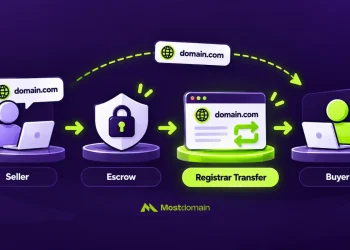
Move the aged domain and the money through an escrow service, never on a buyer’s word. Escrow holds the payment until the name lands in the buyer’s account, which protects both sides and is your single strongest defense against a deal going sideways. A seller who refuses it on a four-figure name reads as a scam, fairly or not.
The mechanics, in order:
- Confirm the name is past ICANN’s 60-day transfer lock. This kicks in after any registration, prior transfer, or change of registrant contact. No registrar can override it.
- Unlock the domain. Unlock by removing the ClientTransferProhibited status in your registrar panel.
- Pull the EPP authorization code. This also called the auth code. Code of an 8 to 16 character string that works as the domain’s transfer password.
- Verify the admin email on the WHOIS record is one you can actually open. Around 60% of failed transfers trace back to an inaccessible admin email, so check it before listing, not after.
- Release the code to the buyer through escrow. The funds clear to you once the transfer completes, usually inside 5 to 7 days for a .com.
When buyer and seller happen to share a registrar, this collapses into a faster account push instead of a full inter-registrar transfer.
When Selling Beats Holding
Sell an aged domain when a clean offer beats what it would earn sitting idle, and hold when it would not. That call is an economics question, and whether the math favors selling at all is worked out in is domain investing profitable. The wider decision, exit versus keep extracting income, routes through the aged domain investing hub rather than getting guessed at here.
- Sell when the offer clears your cost basis with margin and you have a better use for the cash.
- Hold when the name still pulls steady income or sits in a niche that is heating up.
- Bundle related aged domains into one sale when a buyer wants a themed set. Portfolios sometimes clear faster than singles.
FAQ
How long does it take to sell an aged domain?
Anywhere from a single day to several months, demand depending. Fixed-price sales can close in 1 to 3 days, make-offer and auction formats run 1 to 14 days of back-and-forth, and a narrow niche name may simply sit until the right buyer shows up.
What does it cost to sell an aged domain?
The marketplace commission carries most of the cost, running 0% to 25% on the major venues and up to 40% on brandable-only platforms. Layered on top is the transfer fee, usually $8 to $20 for a .com, which also adds a year to the registration.
Do I really need escrow to sell a domain?
For anything past a few hundred dollars, yes. Escrow holds the buyer’s payment until the domain reaches their account. And most marketplaces build it in automatically. A buyer who refuses escrow on a higher-value name is a flag worth walking away from.
Can I sell a domain that recently transferred to me?
Negotiate yes, complete the handover no, at least not right away. ICANN’s 60-day lock blocks an outbound inter-registrar transfer after any registration, transfer, or registrant change, with no workaround. You can agree on a sale during that window; you just cannot finish it until the lock lifts.
Where do aged domains sell for the most?
That hinges on the buyer. Afternic’s distribution reach suits .com names that benefit from registrar-wide exposure, Sedo leans international, and a direct approach to a known end user often beats any marketplace because you skip the commission entirely.
Is selling the same as monetizing an aged domain?
No, and the gap matters. Selling transfers ownership out for one payment, while monetizing keeps the name and earns recurring income off it. They are two different exits, and which one fits comes down to the economics rather than personal preference.
References
- DomainDetails, “Domain Aftermarket Platforms Compared”
- Corg, “How Domain Aftermarket Platforms Work, Inside Sedo, Afternic, and Dan”
- NameExperts, “The Best Places to Buy and Sell Domain Names”
- ICANN, “Transfer Policy”
- NameSilo, “Domain Transfer, EPP Codes, Locks, and Timing”
- Escrow.com, “How to Transfer Domain Names”