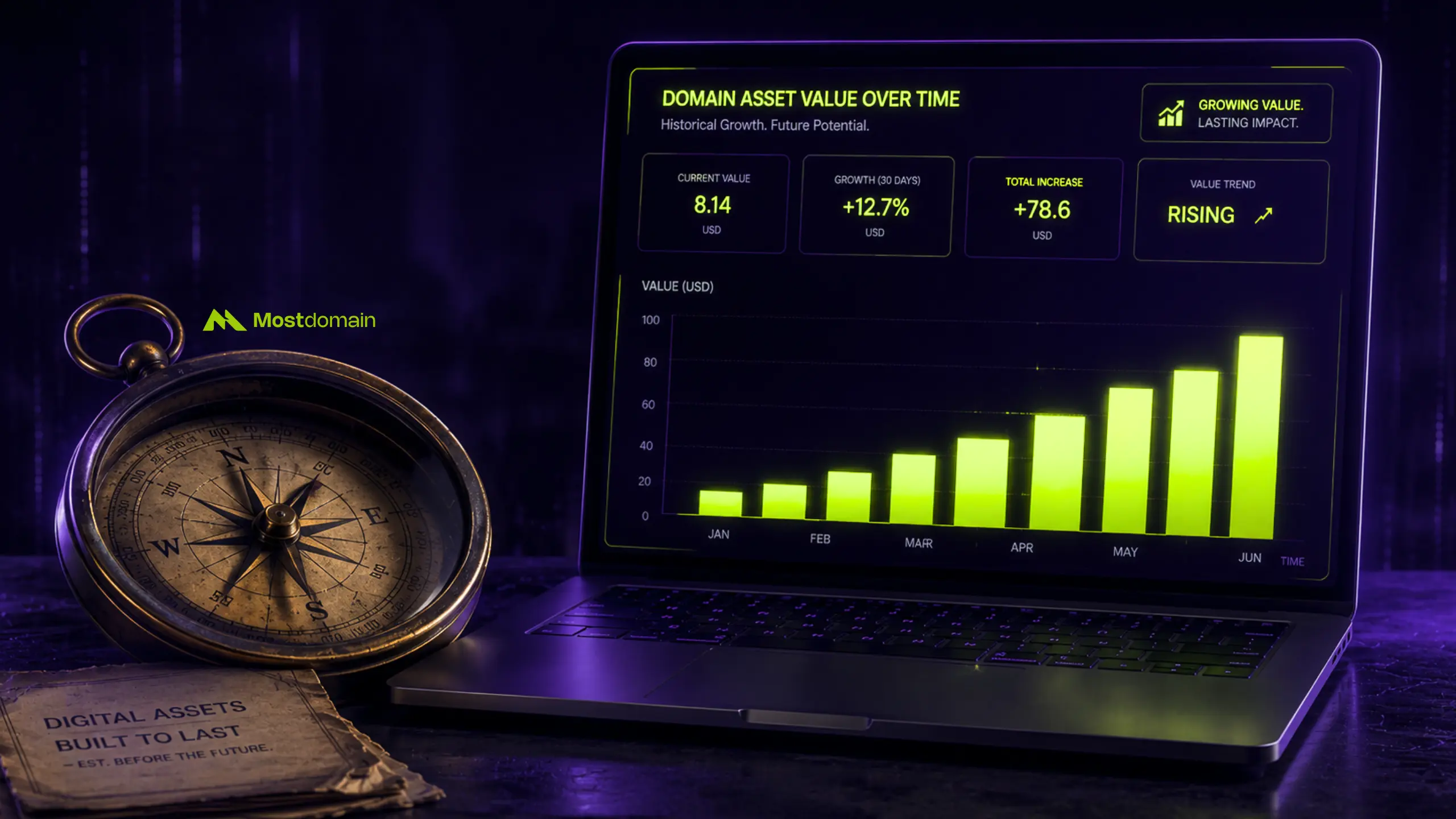
A domain that looks perfectly ordinary on paper can still sell anywhere from $50 to $20,000. And no single number applies across the board. Aged domain cost typically falls in that wide range. And with most workable options landing between $500 and $5,000. What you’re really paying for is backlink history, and every domain carries a different one.
This guide sticks to the pricing side of things: what buyers actually pay, and why. If you want the full framework for judging whether a specific domain is worth that price (age, backlink quality, tool verification), that’s a separate process covered in our guide on evaluating an aged domain’s overall worth.
What Aged Domains Typically Cost by Tier
“Price scales almost directly with backlink strength, sliding from under $500 at the low end up past $5,000 once a domain’s link profile gets genuinely strong.”
| Tier | Price Range | What’s Actually in the Box |
| Budget | $50 – $500 | A handful of links, nothing memorable |
| Mid-range | $500 – $5,000 | Decent referring domains, loosely on-topic, DR usually in the 15-35 range |
| Premium | $5,000 – $20,000+ | Real niche authority: DR north of 35, pages Google still bothers indexing. And traffic that stuck around after the site went quiet |
Cheap doesn’t automatically mean weak. Ten clean, relevant referring domains on a $150 pickup will often do more for a link-building project. Even when compare to a padded $2,000 domain stuffed with irrelevant links ever could.
Why Two Domains at the Same Age Can Cost Completely Different Prices
“Age alone rarely sets the price. Backlink quality and relevance do the heavy lifting here, not the calendar, and a clean history matters just as much as either one.”
- Referring domains: more unique, dofollow links from real, legitimate sites push the price up. Scraper-network links do the opposite, no matter how many of them pad the count.
- Niche relevance. A domain that already lived in your target niche carries context a random-history domain can’t fake its way into.
- Domain Rating: often used as pricing shorthand, though it’s really just one signal among several. Sellers who lean on Domain Rating alone tend to overprice domains that are thin everywhere else.
- Indexed history: pages still sitting in Google’s index are worth more than pages that quietly dropped out months ago, often without the seller even noticing until it’s time to sell.
- Red flags. Past penalties. Spammy anchor patterns. A history stuffed with thin affiliate content. Any single one of these can cut the asking price in half.
Verifying most of these points is really its own project. Our domain age checking and backlink audit guides walk through that process in more depth; this section is only about how those factors translate into price.

What a Realistic Budget Looks Like Depending on How You’ll Use the Domain
“A domain meant to anchor a long-term money site usually justifies a much higher budget than one bought purely to support a PBN, because the two jobs ask completely different things of the domain.”
| Use Case | Rough Budget | Why |
| Money site / brand foundation | $2,000 – $20,000+ | Needs a clean, niche-aligned backlink profile that can carry a brand long-term |
| PBN support domain | $100 – $800 each, often bought in batches | Value comes from bulk relevant links, not any single domain’s polish |
| Brand revival / reused identity | Often $1,000+, wide range | Pays partly for existing recognition, not just SEO metrics |
Buyers who mix these two goals in one purchase tend to overpay. A domain that’s cheap enough to make sense for a PBN rarely has the profile needed to anchor a serious money site, and vice versa. Marketplaces like Mostdomain group listings by these use cases. Which makes it easier to shop within a realistic budget instead of guessing.
The Hidden Costs Most Buyers Forget to Budget For
“The purchase price is rarely the final number. Renewal fees, transfer or escrow charges, and cleanup work on a messy backlink profile can quietly add hundreds of dollars on top.”




| Hidden Cost | Rough Range | When It Hits |
| Annual renewal | $10 – $30 per year | Every domain, every year, indefinitely |
| Escrow or broker fee | 3% – 15% of sale price | Private sales and higher-value auction purchases |
| Backlink cleanup or disavow work | $50 – $300 DIY, more through an agency | Domains worth salvaging despite a few toxic links |
| Content or relaunch cost | Varies widely | Dormant domains that need a rebuilt site before they’re useful |
Here’s the part first-time buyers usually miss: none of these break a budget on their own. Stack them together. And a “$600 domain” quietly turns into a $1,000+ commitment before the first year is out.
A Quick Way to Estimate a Fair Price Before You Buy
“A workable shortcut is to price the domain like the backlinks it carries, then discount that figure for every red flag its history turns up.”
- Start with the quality referring domains: dofollow, from real sites with actual traffic, never scraper pages padding the count.
- From there, multiply that number by what one comparable link would cost to build yourself. It usually somewhere between $50 and $250 depending on the niche.
- Red flags come next. And each one earns a discount off that number. A past penalty signal, spam-heavy anchor text, an unrelated niche history.
- Whatever figure is left after that gets compared against the seller’s asking price, not the other way around.
This won’t give you a perfect number, and it probably shouldn’t be treated as one. It’s a sanity check, not an appraisal.
Before You Commit to a Price
None of the ranges above replace actually looking at the specific domain in front of you. They’re there to sanity-check an asking price someone else set. Not to hand you a number you can quote back without checking the backlink profile yourself first.
FAQ
Is buying an aged domain worth the cost?
For most buyers, yes. Provided the backlink profile is genuinely relevant and clean. The math falls apart if you overpay for links that don’t match your niche. Or that turn out to be low quality on closer inspection.
What’s the cheapest realistic way to get a usable aged domain?
Auctions and drop-catch platforms tend to offer lower entry prices than curated marketplaces. Though you’ll spend more time vetting domains yourself since less pre-filtering has been done.
Is “cost” the same thing as a domain’s actual value?
Not quite. Cost is what you pay; value is a broader judgment that also weighs traffic potential, niche fit, and risk, which is why we cover it separately in our full valuation guide.
Do more expensive aged domains always rank faster?
Not automatically. A high price tag reflects backlink strength, but ranking speed also depends on content quality, niche competition, and how the site is built out after purchase.
How much should a beginner budget for their first aged domain?
Somewhere in the $300 to $1,000. The range is usually enough to get a domain with a decent, verifiable backlink profile without taking on the higher risk that comes with premium-tier purchases.
References
- Ahrefs, “What is Domain Rating (DR)?”
- SearchLogistics, “What Are Aged Domains And How Can I Use Them?”
- SerpNames, “Buying Aged Domains”
- DomCop, “Buying Expired Domains For SEO: Detailed Evaluation Guide”
- Search Engine Journal, “How to Determine the Value of a Backlink”