
Mostdomain – Free domain registration without hosting means claiming a domain name with zero hosting attached. You pay nothing for the name itself. No bundled hosting plan, no forced upgrade. This guide breaks down real providers, renewal rules, and smart use cases. By the end, you will know exactly how to register one today.
What Is Free Domain Registration Without Hosting?
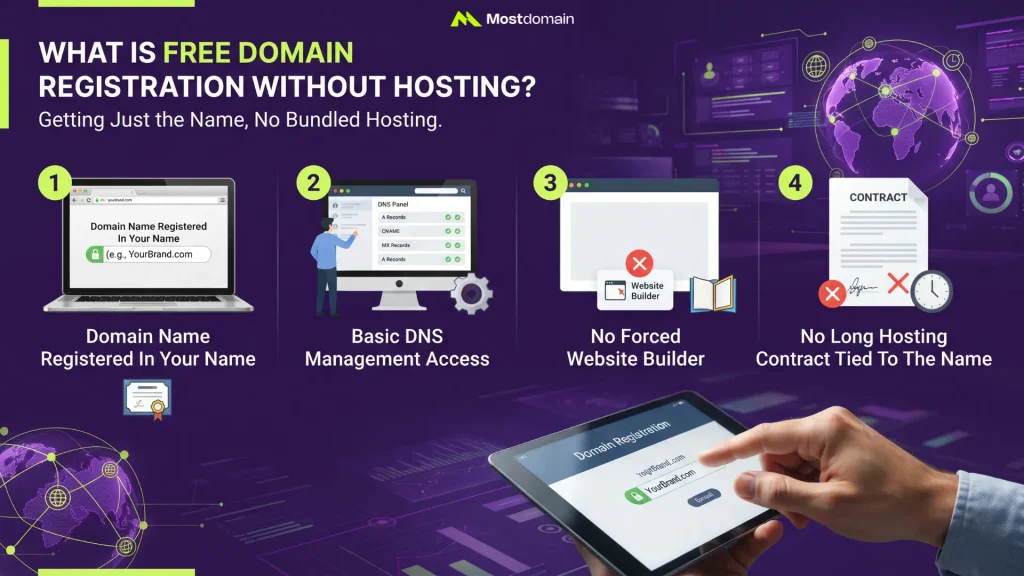
Free domain registration without hosting means getting just the name, no hosting bundled in. You own the domain, not a hosting slot attached to it.
Most free domain offers come glued to a hosting plan. Our guide on securing a free domain name already covers those bundled options. This article skips that path entirely. Instead, it targets registrars offering domain-only registration. That is a narrower, more specific need, and honestly, a smarter one if you already have hosting sorted elsewhere.
A true no-hosting free domain usually includes:
- A domain name registered in your name
- Basic DNS management access
- No forced website builder
- No long hosting contract tied to the name
How to Get a Free Domain Name Without Hosting
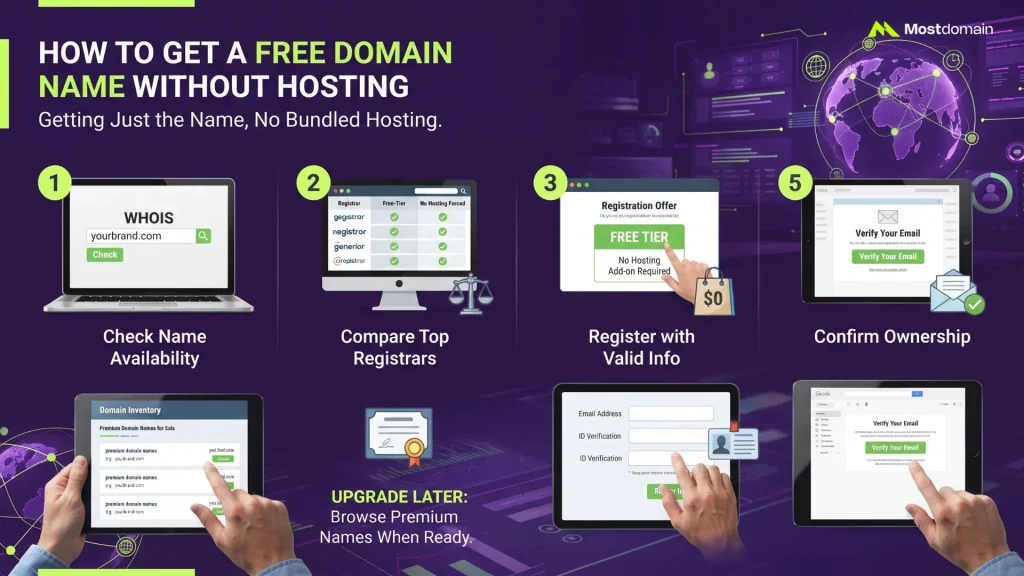
You get a free domain without hosting through student programs, promos, or free-tier registrars. A handful of providers still run domain-only free plans, though they’re getting rarer.
Here’s the practical path:

- Check name availability first using a WHOIS lookup tool
- Compare options in our list of top domain registrars
- Pick a free-tier offer with no forced hosting add-on
- Register using a valid email and ID
- Confirm ownership through the verification email
Once your free domain outgrows itself, upgrading is simple. Browse premium names directly in our domain inventory whenever you’re ready for something more established.
Free vs Paid Domain Registration Without Hosting
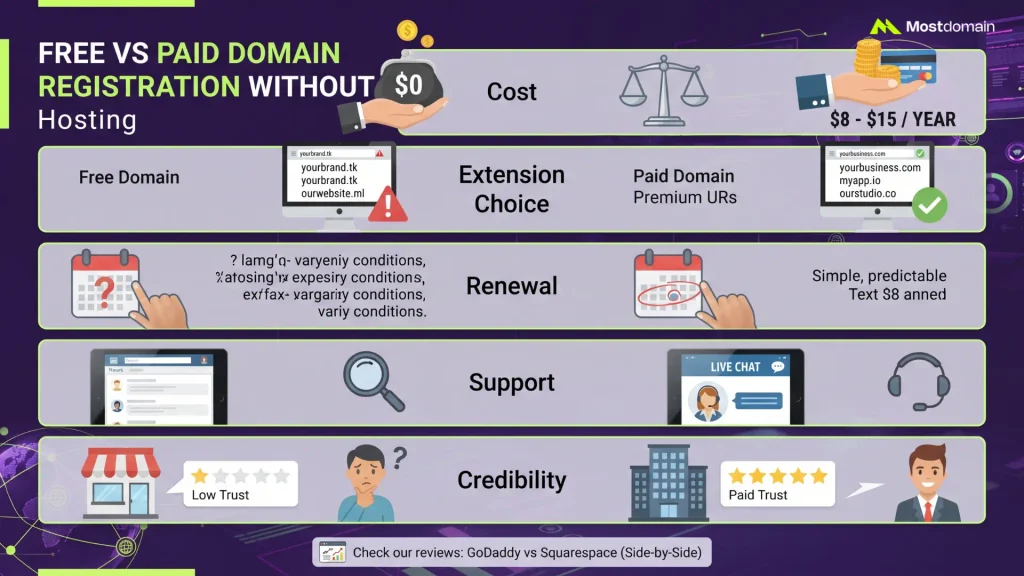
Paid domains without hosting cost more, but you gain stronger extensions and real support. Free domains save money upfront, and that trade-off matters for different people.
| Factor | Free Domain (No Hosting) | Paid Domain (No Hosting) |
| Cost | $0 upfront | $8 to $15 per year, roughly |
| Extension choice | Limited, often .tk, .ml, niche TLDs | Full range, including .com, .io, .co |
| Renewal | Yearly, conditions vary by provider | Fixed annual renewal, predictable |
| Support | Minimal, often community forums only | Dedicated customer support |
| Credibility | Lower trust signal with visitors | Higher trust signal, especially for business |
Our GoDaddy domain review breaks down one popular paid option. For a side-by-side comparison, read our Squarespace versus GoDaddy guide. Both help you decide if free still makes sense for your project.




Can You Keep a Free Domain Without Hosting Long Term?
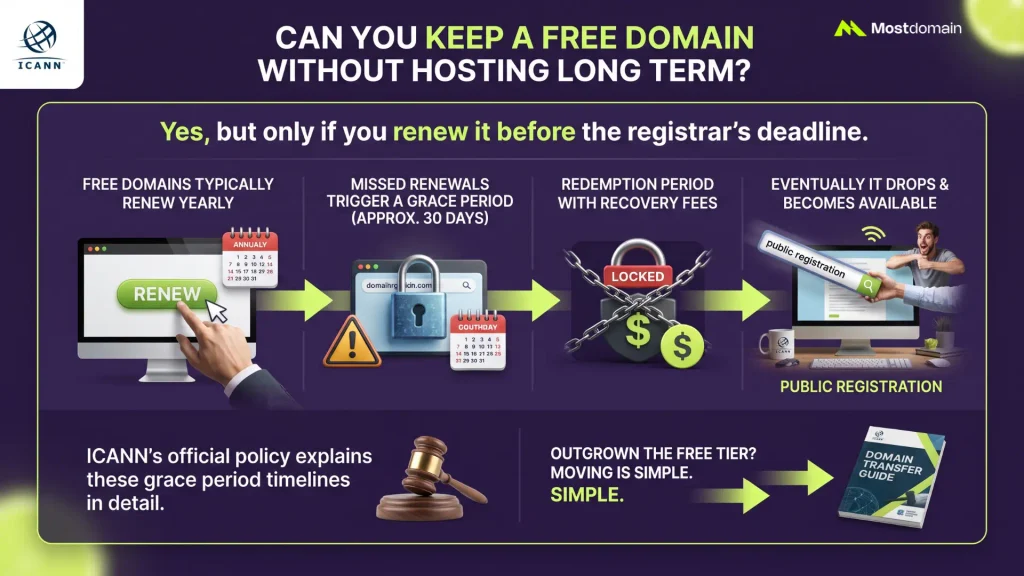
Yes, but only if you renew it before the registrar’s deadline. Free rarely means forever, no matter what the landing page implies.
- Free domains typically renew yearly, not permanently
- Missed renewals trigger a grace period, usually around 30 days
- After that, the domain enters redemption, with recovery fees attached
- Eventually it drops, and anyone else can register it
ICANN’s official policy explains these grace period timelines in detail. Worth a skim if you’re planning to keep a domain for years.
If you outgrow the free tier, moving is simple. Our domain transfer guide covers that whole process, step by step.
Best Use Cases for a Free Domain Without Hosting
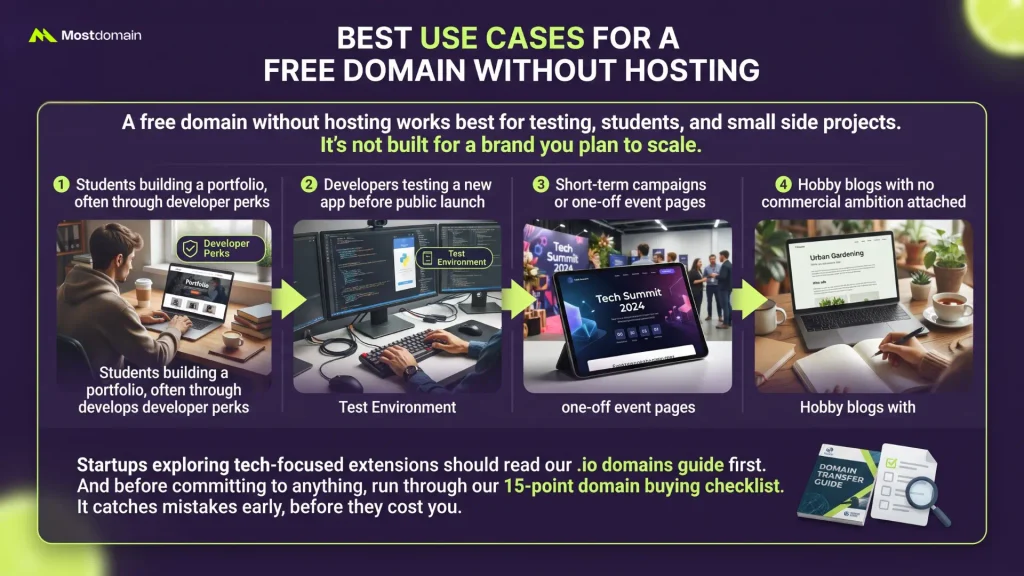
A free domain without hosting works best for testing, students, and small side projects. It’s not built for a brand you plan to scale.
- Students building a portfolio, often through developer perks
- Developers testing a new app before public launch
- Short-term campaigns or one-off event pages
- Hobby blogs with no commercial ambition attached
Startups exploring tech-focused extensions should read our .io domains guide first. And before committing to anything, run through our 15-point domain buying checklist. It catches mistakes early, before they cost you.
Common Mistakes to Avoid
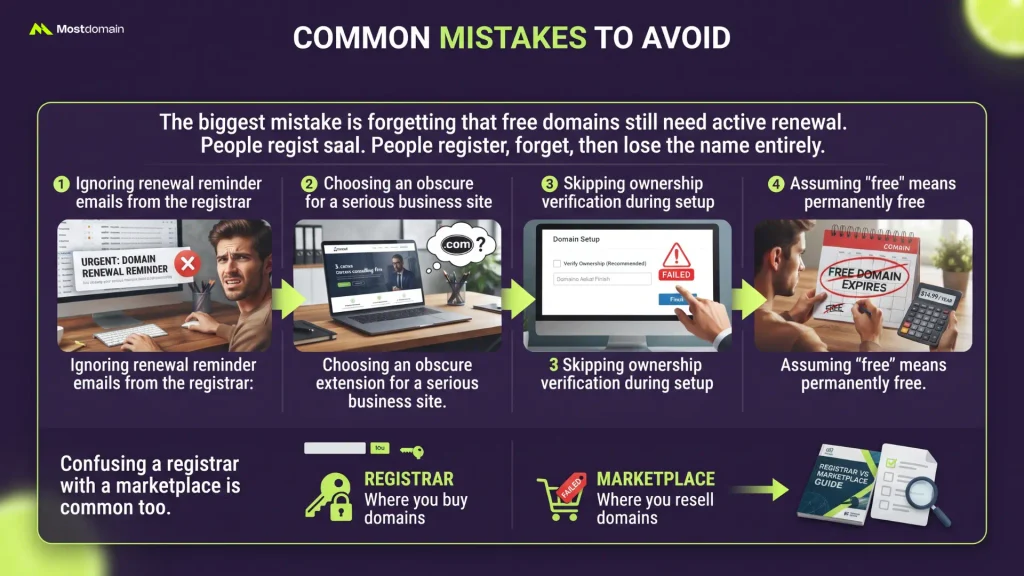
The biggest mistake is forgetting that free domains still need active renewal. People register, forget, then lose the name entirely.
- Ignoring renewal reminder emails from the registrar
- Choosing an obscure extension for a serious business site
- Skipping ownership verification during setup
- Assuming “free” means permanently free, which it almost never does
Confusing a registrar with a marketplace is common too. Our registrar versus marketplace guide clears up that confusion fast, so you know exactly where to shop next.
FAQ
Is a free domain without hosting good for SEO?
A free domain can rank, but paid extensions usually perform better long term. Search engines don’t penalize free TLDs directly. Still, trust signals from .com or .io tend to help conversions more than rankings.
Can I connect a free domain to my own server?
Yes, most free registrars let you point DNS to any server you choose. You just need access to the domain’s nameserver settings. Not every free provider allows this, so check before registering.
How long does free domain registration take?
Registration usually finishes within minutes once your details are verified. Some providers add a manual review step. That can stretch the wait to a day or two.
Does a free domain expire if I don’t use it?
Yes, it expires once the registration period ends without renewal. Inactivity alone doesn’t trigger expiration. Only a missed renewal does.
Can I upgrade a free domain to a paid one later?
Yes, most registrars allow a simple paid upgrade anytime. You keep the same domain name. Only the extension or plan type might need to change.
Free domain registration without hosting is a fine starting point, not a finish line. Treat it as a test run, not your final address. When the project gets serious, the domain should too.
References
- ICANN, gTLD Life Cycle and Grace Period Policy