
Info.cern.ch takes the title. Tim Berners-Lee launched it on August 6, 1991, and it’s still the oldest website currently running. The oldest registered domain, though, predates that by six years: symbolics.com, registered March 15, 1985, sat dormant as far as actual web content goes until much later. Both are still reachable in a normal browser today, alongside 20-plus other survivors from the 1980s and 90s.
Back in 1991 there was exactly one page online. Now there are over 1.9 billion websites, and somehow a handful of pages from the dial-up era never got the memo that they were supposed to disappear. Every pixel used to cost something real in load time, so early builders stripped things down out of necessity, not taste. That’s a big part of why these pages still run the same way they did decades ago.
“The original idea of the web was that it should be a collaborative space where you can communicate through sharing information.” — Tim Berners-Lee
What Counts as an “Ancient” Website?
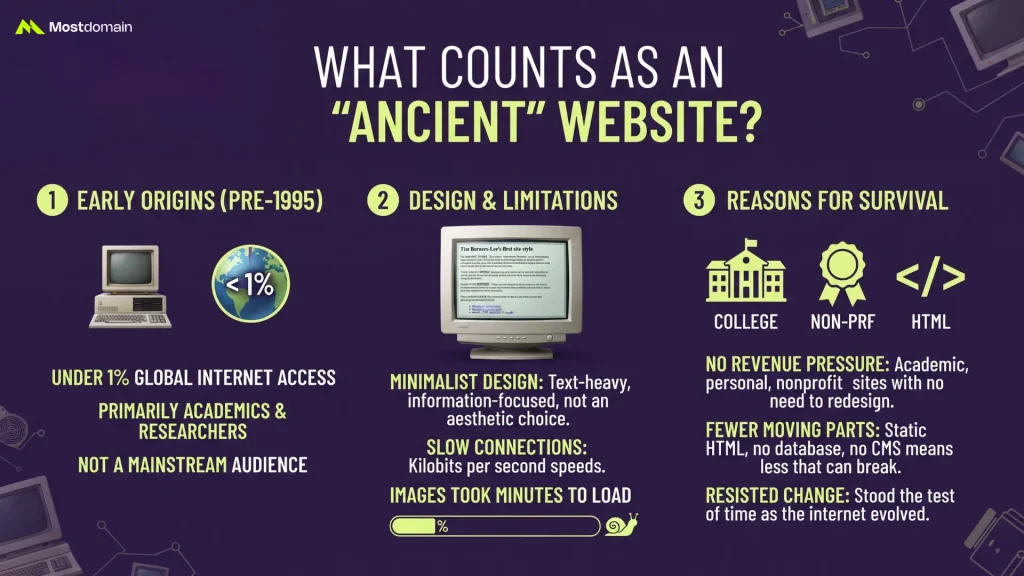
Anything before 1995 qualifies, back when under 1% of the world had internet access at all, mostly academics and researchers at universities. Not exactly a mainstream audience.
What ties these survivors together isn’t nostalgia. It’s structure: minimal design, heavy on text, built to deliver information rather than impress anyone visually. Connections back then ran at kilobits per second. A single decent-resolution image could take several minutes to load. Nobody chose minimalism as an aesthetic. It was the only option that worked.
Two other things kept these sites alive long after their era ended:

- Nobody was chasing revenue. Most were academic, personal, or nonprofit, so there was no pressure to redesign every quarter.
- Fewer moving parts, fewer ways to break. Static HTML with no database and no CMS means there’s just less that can fail as the rest of the internet changes around it.
Quick Reference: All 20+ Oldest Websites at a Glance
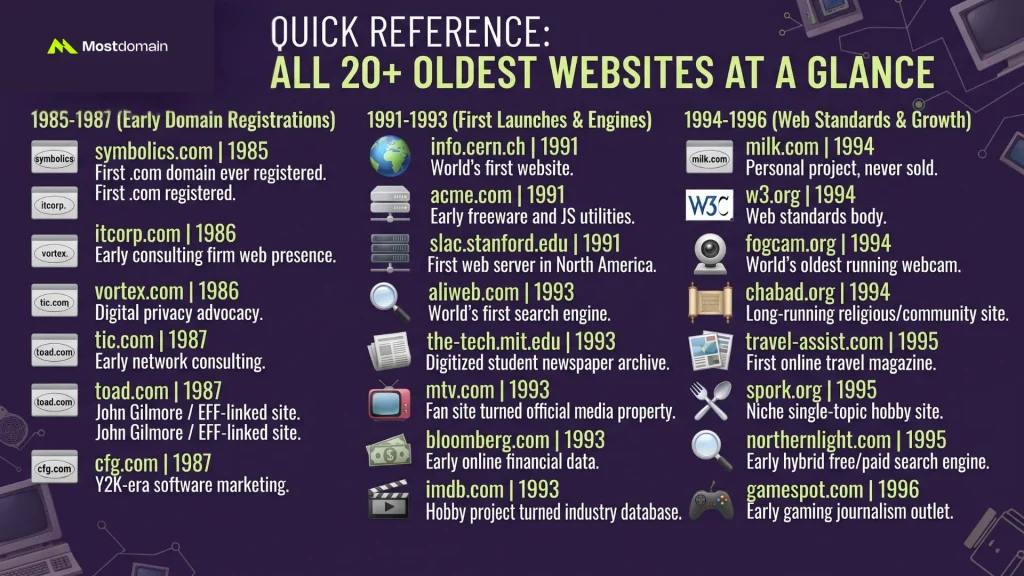
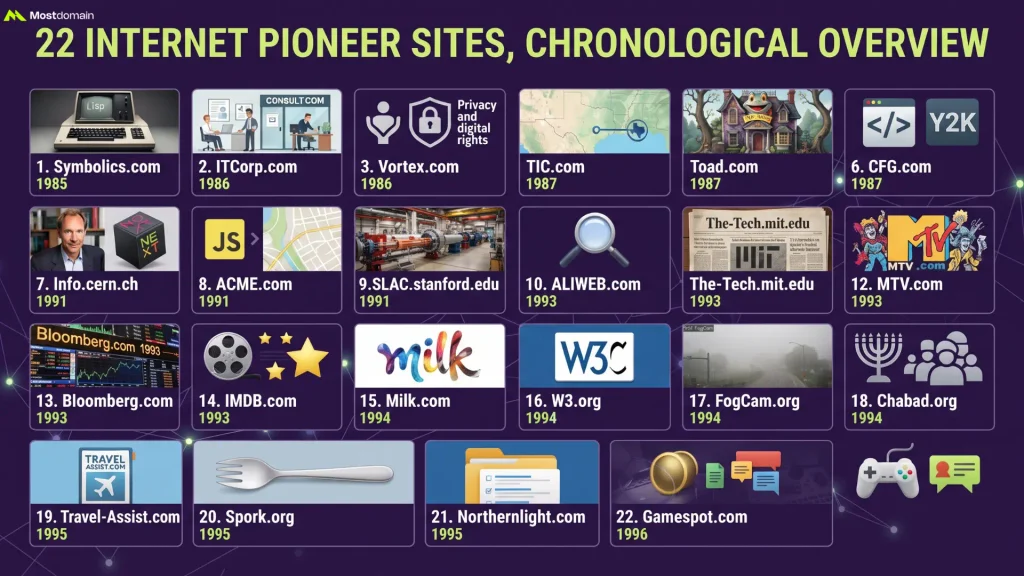
| # | Site | Year | Type | Known For |
| 1 | symbolics.com | 1985 | Domain registration | First .com domain ever registered |
| 2 | itcorp.com | 1986 | Domain registration | Early consulting firm web presence |
| 3 | vortex.com | 1986 | Domain registration | Digital privacy advocacy |
| 4 | tic.com | 1987 | Domain registration | Early network consulting |
| 5 | toad.com | 1987 | Domain registration | John Gilmore / EFF-linked site |
| 6 | cfg.com | 1987 | Domain registration | Y2K-era software marketing |
| 7 | info.cern.ch | 1991 | Website launch | World’s first website |
| 8 | acme.com | 1991 | Website launch | Early freeware and JS utilities |
| 9 | slac.stanford.edu | 1991 | Website launch | First web server in North America |
| 10 | aliweb.com | 1993 | Website launch | World’s first search engine |
| 11 | the-tech.mit.edu | 1993 | Website launch | Digitized student newspaper archive |
| 12 | mtv.com | 1993 | Website launch | Fan site turned official media property |
| 13 | bloomberg.com | 1993 | Website launch | Early online financial data |
| 14 | imdb.com | 1993 | Website launch | Hobby project turned industry database |
| 15 | milk.com | 1994 | Domain registration | Personal project, never sold |
| 16 | w3.org | 1994 | Website launch | Web standards body |
| 17 | fogcam.org | 1994 | Website launch | World’s oldest running webcam |
| 18 | chabad.org | 1994 | Website launch | Long-running religious/community site |
| 19 | travel-assist.com | 1995 | Website launch | First online travel magazine |
| 20 | spork.org | 1995 | Domain registration | Niche single-topic hobby site |
| 21 | northernlight.com | 1995 | Website launch | Early hybrid free/paid search engine |
| 22 | gamespot.com | 1996 | Website launch | Early gaming journalism outlet |
The Crown Jewel: What Was the Very First Website?
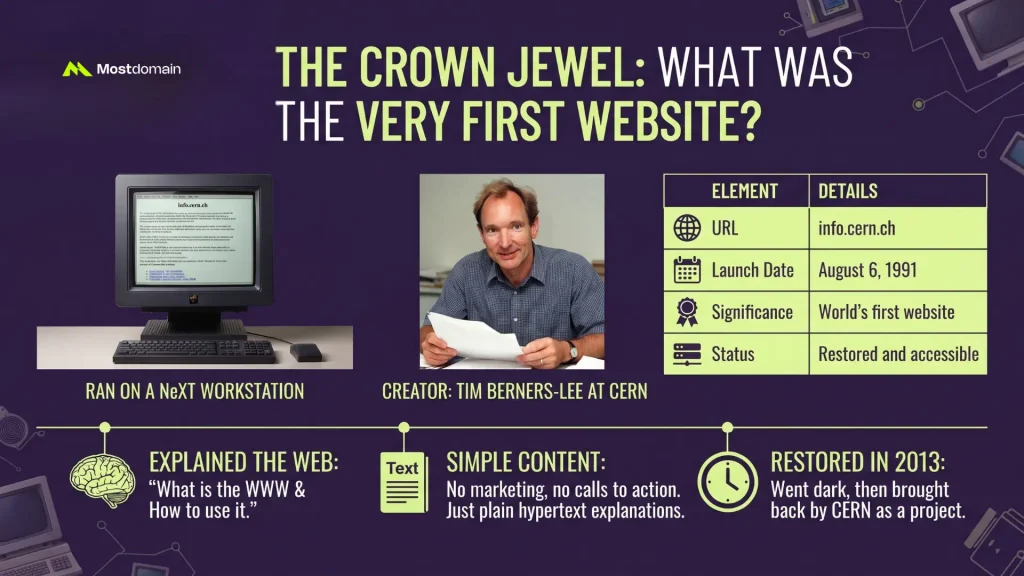
Tim Berners-Lee built it at CERN. Info.cern.ch went live August 6, 1991, and its entire job was explaining a concept nobody watching had ever encountered: what is the World Wide Web, and how do you actually use it.
It ran on his NeXT workstation, a machine that cost more than most cars at the time, which tells you something about how exclusive web development was in year one. No marketing copy, no calls to action anywhere on the page. Just plain explanations of hypertext, server setup, and browser basics. That was the whole pitch.
The site eventually went dark during the web’s explosive growth through the 90s. CERN brought it back in 2013 as a restoration project, and it’s been sitting there online ever since, unchanged.




| Website Element | Details |
| URL | info.cern.ch |
| Launch Date | August 6, 1991 |
| Creator | Tim Berners-Lee |
| Significance | World’s first website |
| Status | Restored and accessible |
Oldest Domain vs. Oldest Website: Two Different Records
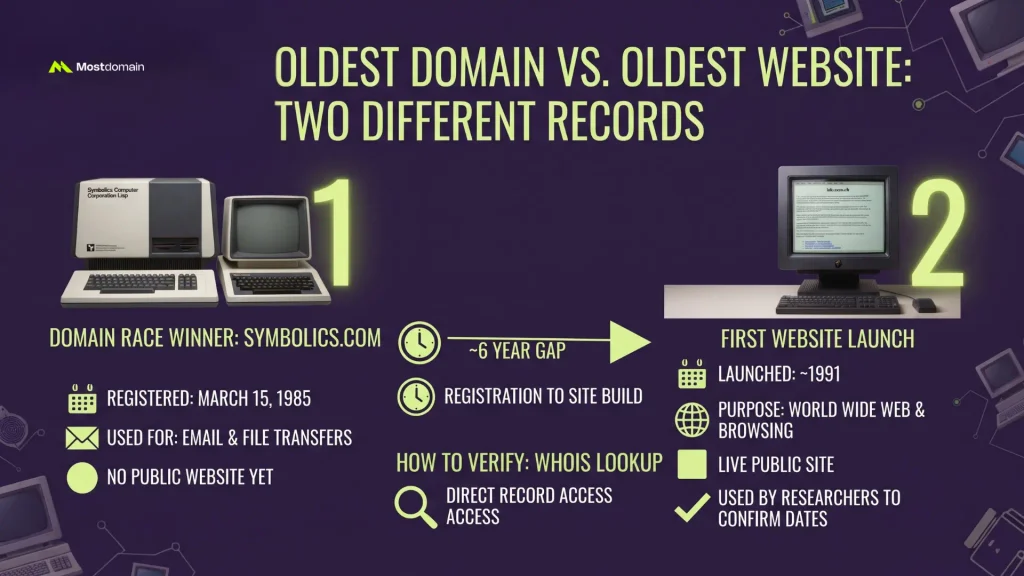
Symbolics.com wins the domain race, registered March 15, 1985. It just didn’t have a website attached to it for years. That gap, roughly six years between registering the name and anyone building something on it, trips up a lot of people who assume the two milestones happened together.
Before domains existed at all, reaching another computer meant memorizing a numeric IP address. The Domain Name System fixed that. Symbolics Computer Corporation, which built Lisp machines for early AI research, grabbed their domain years ahead of the first actual website going live anywhere. Back then domains mostly handled email and file transfers. Hosting a public site wasn’t really the point yet.
If you want to verify a claim like this yourself, a WHOIS lookup pulls the registration record directly. Same tool researchers use to confirm dates like these.
20+ Internet Pioneers, Ranked by Age
1. Symbolics.com (1985)
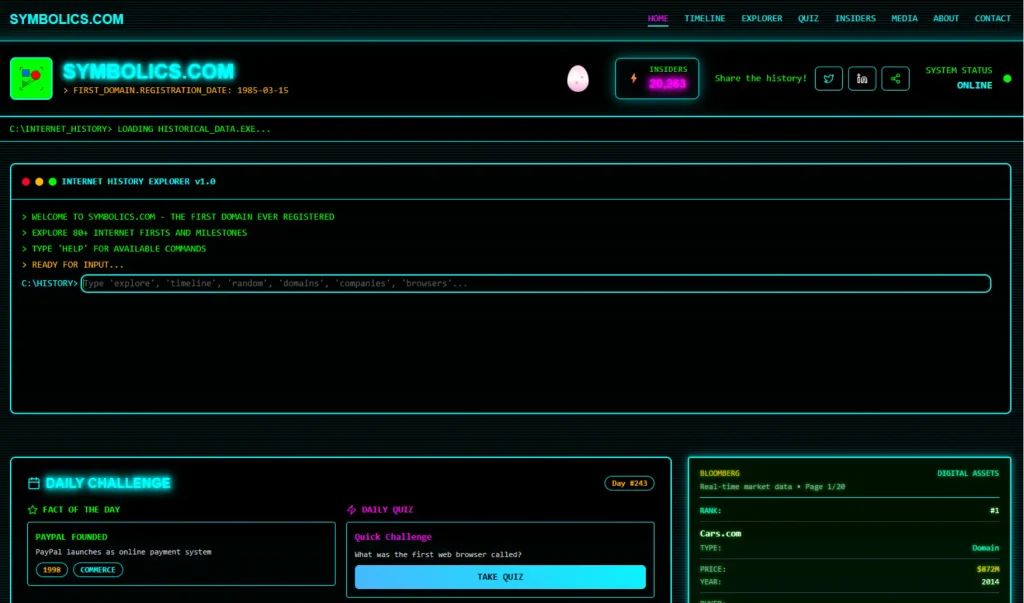
Domain Registration: March 15, 1985
The first .com ever registered, originally belonging to Symbolics Computer Corporation, a manufacturer of Lisp machines used in early AI work. The domain has outlived the company by decades at this point.
Current owners run it as a small museum documenting how domain registration and the commercial internet evolved out of a research network. Worth a visit if you’ve never actually seen a 1985 domain still standing.
2. ITCorp.com (1986)

Domain Registration: September 18, 1986
Interrupt Technology Corporation put up one of the earliest consulting-firm websites, years before most businesses had any idea what a website was for. Their tagline pretty much admits it: the site exists “primarily to satisfy the needs of those who expect every domain to have a Web presence.”
Honest, at least. And that early registration bought them decades of brand recognition most competitors never caught up to.
3. Vortex.com (1986)
Domain Registration: October 27, 1986
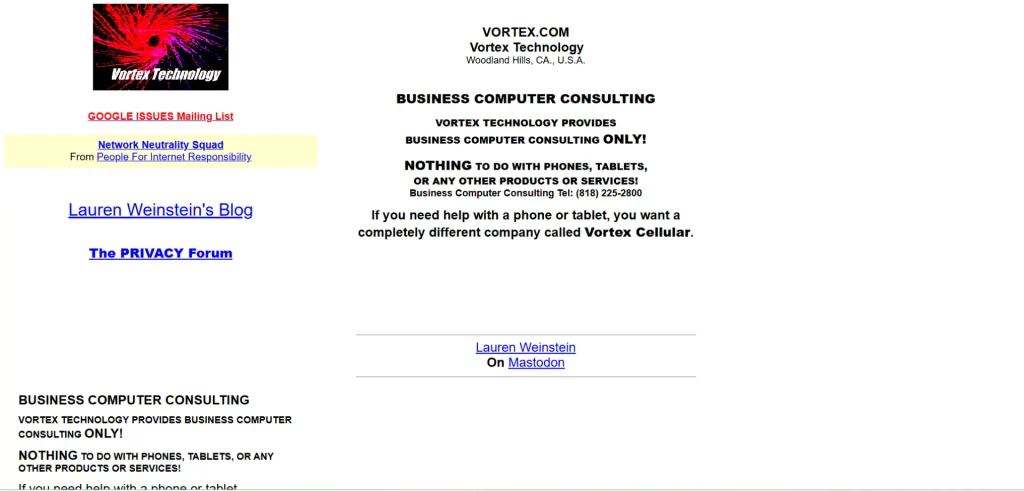
Lauren Weinstein has run this one site with the same mission for almost 40 years now: privacy and digital rights. He was worried about commercial and government overreach on the network long before most people had a reason to care.
The site now works as both a historical record and an active platform, tracking privacy concerns from early email monitoring all the way to today’s data collection debates.
4. CFG.com (1987)
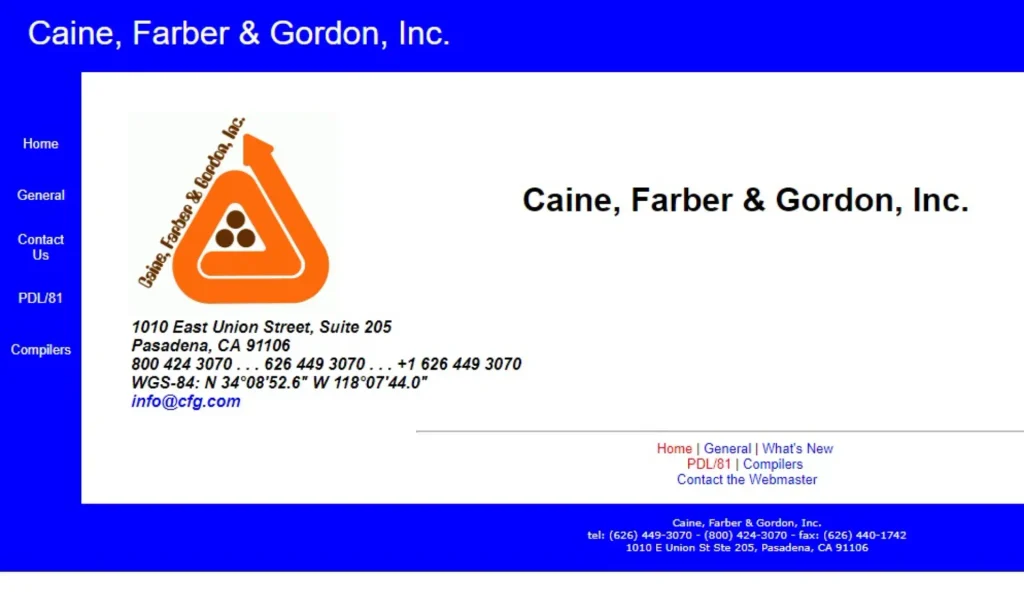
Domain Registration: November 2, 1987
Caine, Farber & Gordon put software marketing online early, mostly around their PDL/81 Program Design Language Processor. That product got a surprise second act as a Y2K-compliant fix when businesses panicked about the millennium bug in the late 90s.
Their long-standing domain gave them instant credibility exactly when demand for decades-old software suddenly spiked. Good timing, mostly by accident.
5. Info.cern.ch (1991)

Launch Date: August 6, 1991
The most significant entry here, full stop. Berners-Lee built it to explain HTML, URLs, and HTTP, the same protocols still holding up the modern web.
He chose to keep the underlying technology free and open instead of trying to commercialize it. That single decision arguably shaped how fast and how widely the web spread afterward. The restored version reads exactly as plain as it did in 1991.
6. ACME.com (1991)
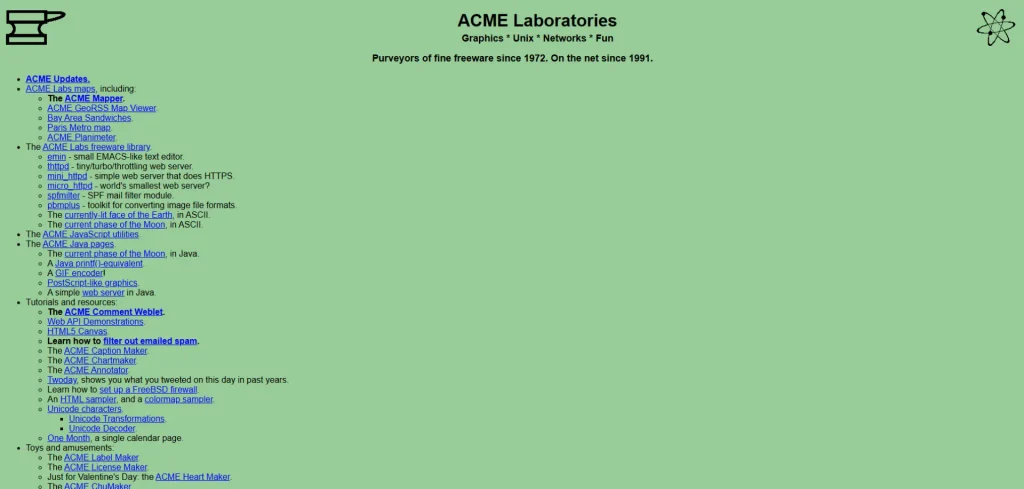
Domain Registration: April 1991
One of the earliest personal freeware projects online, offering JavaScript utilities and city maps, several of which still function today. No pitch deck, no monetization plan, just tools someone thought were useful.
That focus on usefulness over promotion is probably why it’s still around. People kept coming back because the tools worked, not because of any marketing push.
7. SLAC.stanford.edu (1991)

Launch Date: December 1991
Stanford Linear Accelerator Center ran the first web server in North America, which is how the web actually crossed the Atlantic in practical terms. Physics researchers needed a way to share data across institutions, and the web solved that faster than anything else available.
SLAC’s early implementation ended up setting publishing norms that other research institutions picked up later, mostly without fanfare.
8. ALIWEB.com (1993)
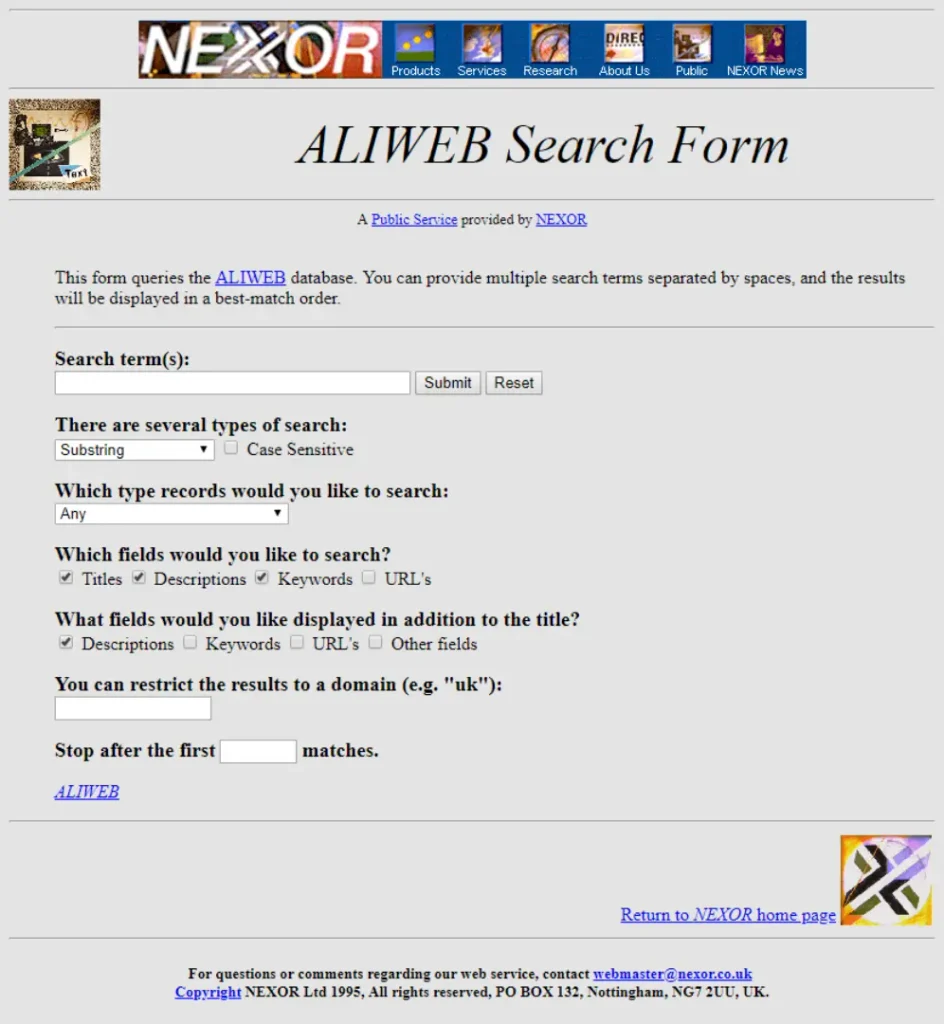
Launch Date: May 1993
Short for Archie Like Indexing for the Web. ALIWEB was the first search engine, built to solve a problem that was only getting worse: finding anything at all in a web that kept growing. Webmasters had to manually submit their own sites, which automated crawlers later made obsolete.
Small and curated instead of comprehensive, but it laid groundwork that every automated search engine after it quietly built on top of.
9. The-Tech.mit.edu Now thetech.com (1993)
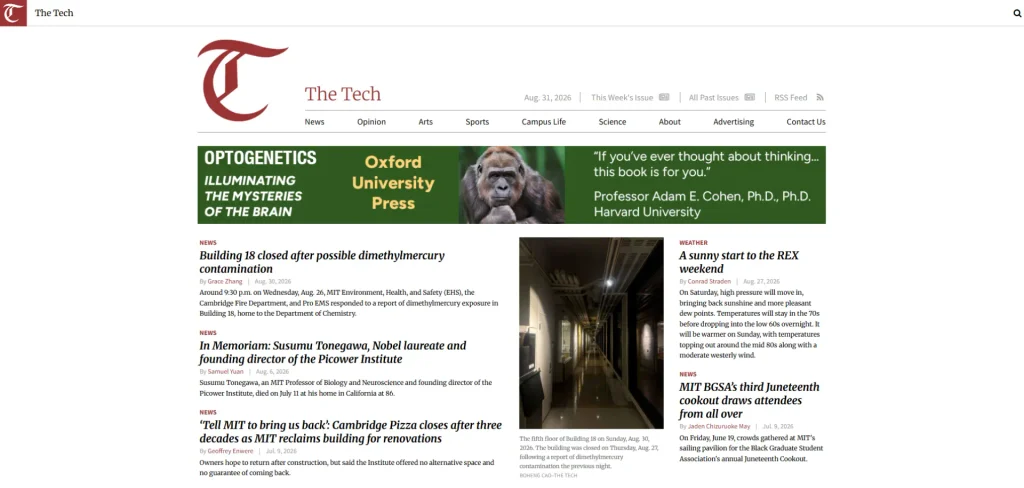
Launch Date: May 1993
MIT’s student newspaper made one of the earliest successful jumps from print to web. Its archive goes back to the paper’s very first issue in 1881, a digitization project that predates most institutional archiving efforts by years.
Researchers, alumni, historians, all of them get a searchable record of MIT’s academic culture stretching back over a century. Not many universities had anything comparable this early.
10. MTV.com (1993)
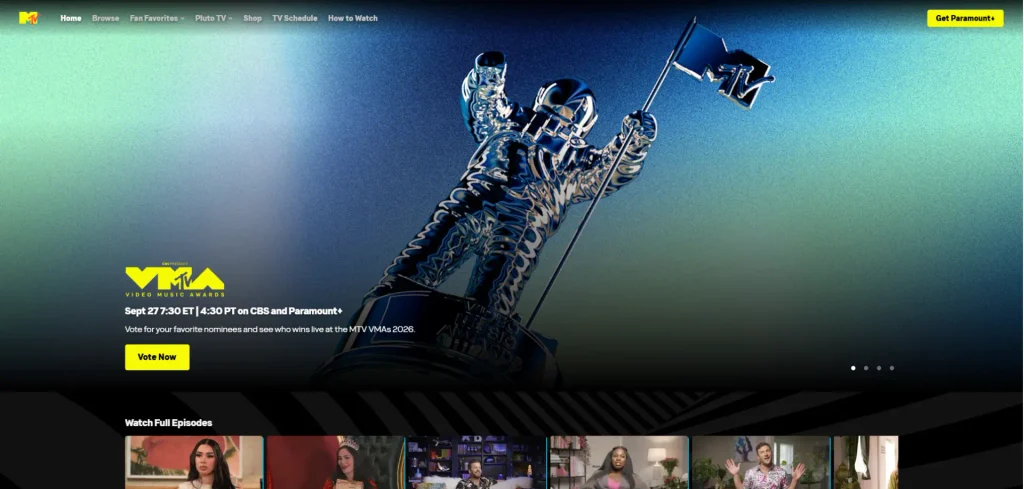
Launch Date: August 1993
Started as an unofficial fan site built by MTV VJ Adam Curry. One of the first real examples of a grassroots digital community forming around an entertainment brand, before the brand itself had shown up online.
MTV eventually bought the fan project outright, which was itself a fairly novel move: a media company absorbing something fans built rather than commissioning it from scratch.
11. Bloomberg.com (1993)

Launch Date: September 1993
Bloomberg saw something print media simply couldn’t match: speed. Financial professionals needed market data faster than any printed publication could deliver it, so Bloomberg.com filled that gap while the idea was still novel.
That early bet on speed paid off as global markets got more interconnected and more time-sensitive, eventually becoming the foundation for the platform Bloomberg still runs.
12. IMDB.com (1993)
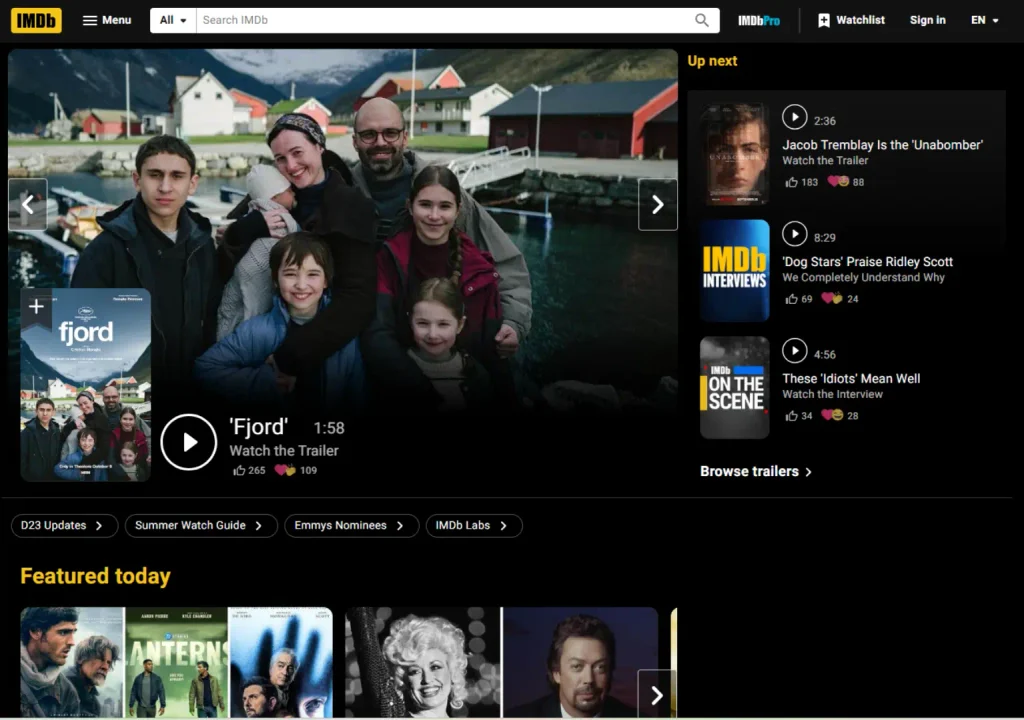
Launch Date: 1993
Started as Col Needham’s hobby project, nothing more than one person organizing film information out of personal interest. It became an industry-standard resource almost entirely through user-contributed content, not corporate investment.
That pattern, individual enthusiasm plus crowdsourced content, turned into a template a lot of other niche databases copied afterward, well outside of film.
13. Milk.com (1994)
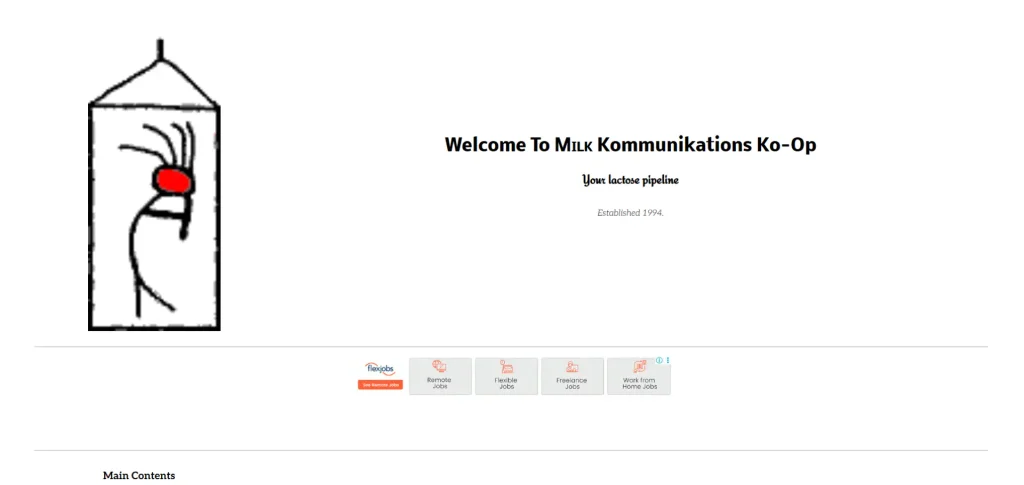
Domain Registration: August 1994
Nothing to do with dairy, despite the name. It’s a deliberately odd personal site, and the owner has reportedly turned down real money to sell the domain over the years.
That refusal says something about the era. A domain name used to carry personal meaning that could genuinely outweigh what someone was willing to pay for it.
14. W3.org (1994)
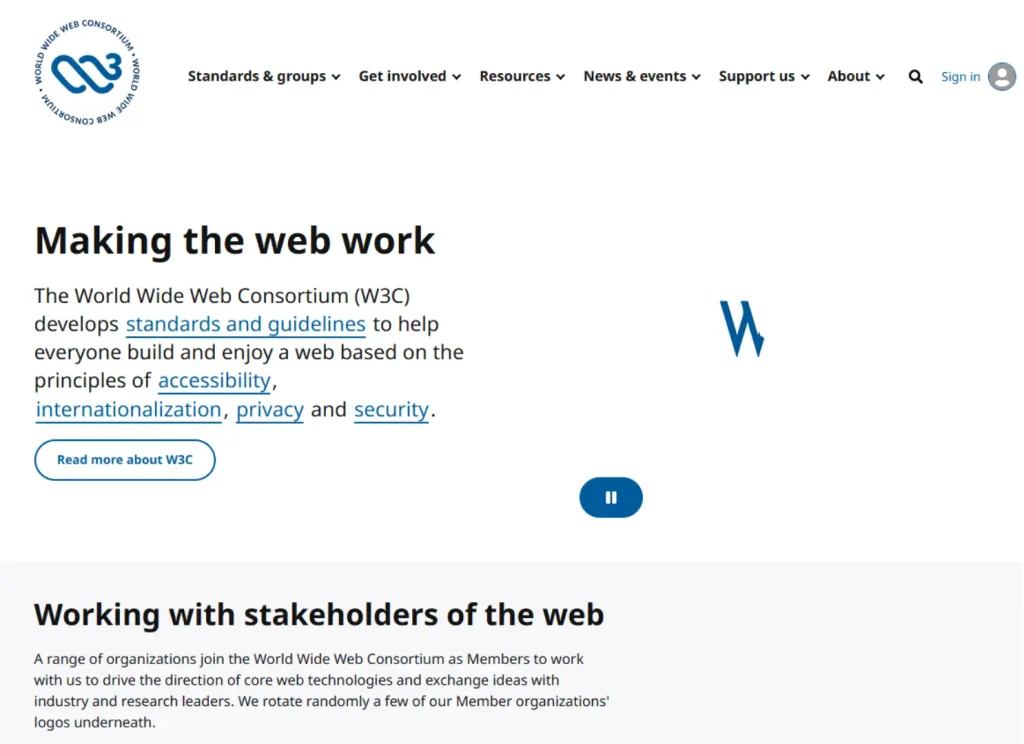
Launch Date: July 1994
The World Wide Web Consortium runs this to keep web standards interoperable across every system and platform out there. Without that coordination, the web could have easily splintered into competing, incompatible versions controlled by whichever company got there first.
It works as both an active standards body and a historical archive, letting anyone trace how HTML, CSS, and XML evolved through three decades of documented proposals.
15. FogCam.org (1994)
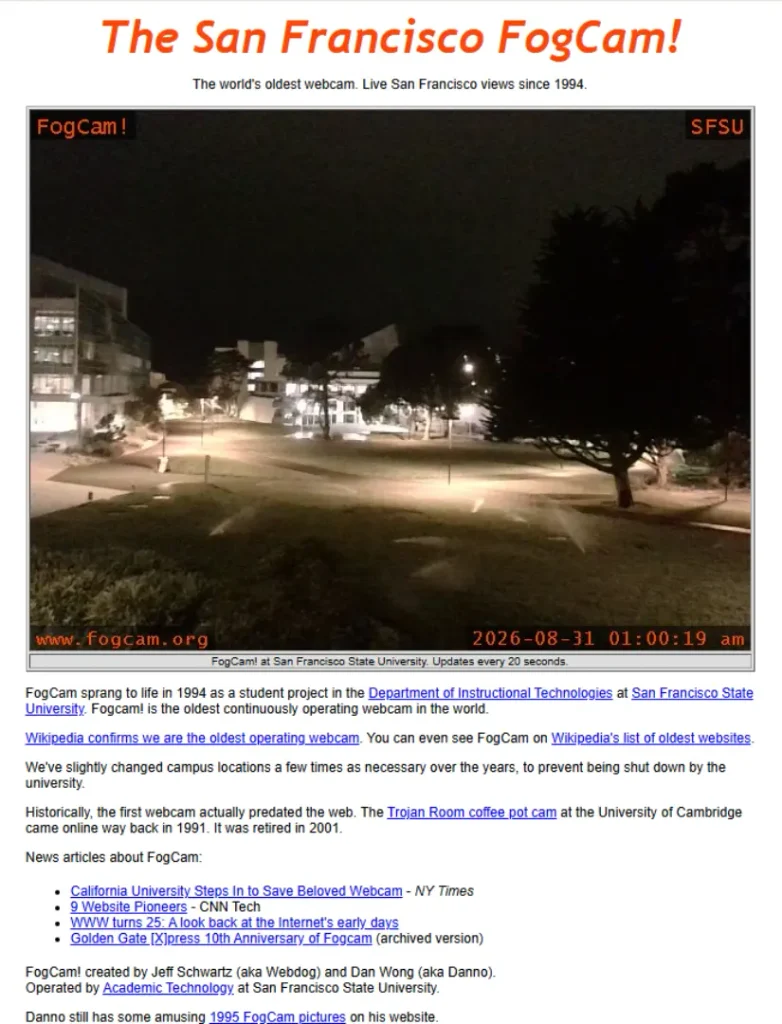
Launch Date: July 1994
The oldest continuously operating webcam anywhere, built by two San Francisco State University students just to capture daily campus life and weather. Roughly three decades running now, without much interruption.
Nobody planned this, but that long uninterrupted feed accidentally became a useful dataset for anyone studying how San Francisco’s weather and skyline have shifted over time.
16. Chabad.org (1994)
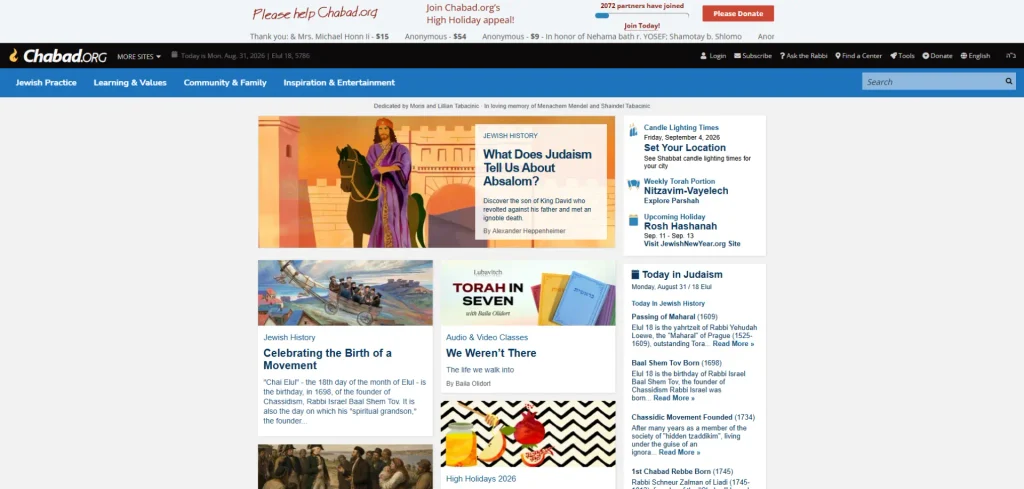
Launch Date: 1994
One of the oldest religious websites still active, offering educational resources and community support for Jewish communities worldwide. It recognized early, earlier than most religious organizations, that the internet could stretch a community’s reach well past physical geography.
Daily prayers, community event listings, ongoing discussions. The site shows how a digital platform can reinforce existing community structures instead of replacing them outright.
17. travelassist.com (1995)

Launch Date: 1995
The first online travel magazine, publishing destination guides and travel tips before booking platforms existed in any real form. It stuck to editorial content rather than transactions, which turned out to matter later.
That choice gave it staying power through several shifts in the travel industry, mostly because it never depended on booking revenue the way commercial travel sites eventually did.
18. Spork.org (1995)
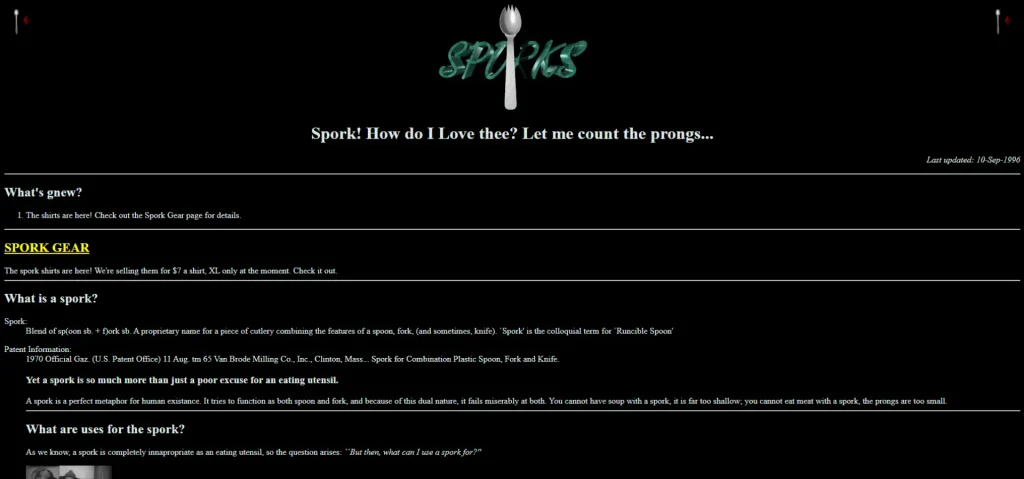
Domain Registration: 1995
Dedicated entirely to the spoon-fork hybrid utensil. A subject this niche only really finds an audience once the internet makes it possible for a handful of scattered enthusiasts to find each other at all.
Its survival is a decent argument that genuine, narrow enthusiasm keeps a site alive longer than chasing broad appeal ever does.
19. Northernlight.com (1995)

Launch Date: 1995
Combined regular search results with access to premium database content, an early attempt at mixing free and paid information services. Results landed in topical folders instead of one flat ranked list.
That organizational choice ended up influencing how later search engines structured more complex results, well past Northern Light’s own run as an independent product.
20. Gamespot.com (1996)

Launch Date: 1996
Became a go-to destination for game news, reviews, and community discussion, using the internet’s interactivity in ways print gaming magazines simply couldn’t. Its game database and review structure set a pattern other outlets picked up later.
Video reviews were an early move here too, and that use of multimedia journalism eventually became standard everywhere online, not just in gaming coverage.
Why Did These Digital Dinosaurs Survive?
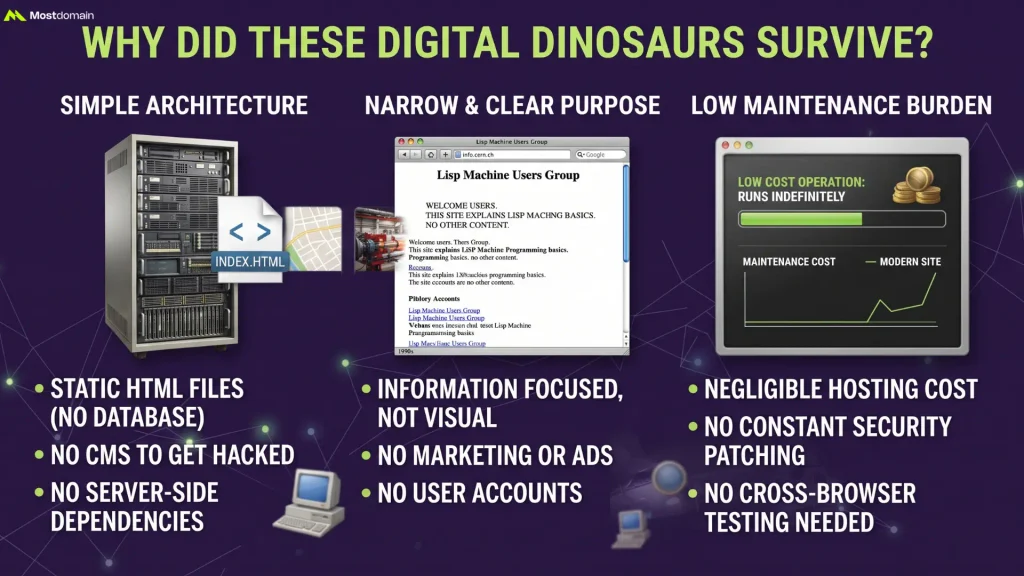
Three things, mostly: simple architecture, a narrow clear purpose, and almost no maintenance burden. None of them needed constant security patching or cross-browser testing the way a modern site does.
Static HTML with no database layer removes entire categories of failure before they can even happen. No CMS to get hacked. No server-side language quietly falling out of support. No dependency chain waiting to snap when one library updates somewhere upstream. As long as a basic server can still push out an HTML file, the site keeps working.
Cost mattered too, probably more than people give it credit for. Simple HTML sites run on almost nothing, so even domains with barely any commercial value could stay online indefinitely without anyone noticing the expense. That mattered a lot during the dot-com crash, when venture-funded startups burned through millions on elaborate sites that vanished the moment funding dried up. Meanwhile these low-cost pages just kept running in the background, unbothered.
What Modern Developers Can Actually Learn Here
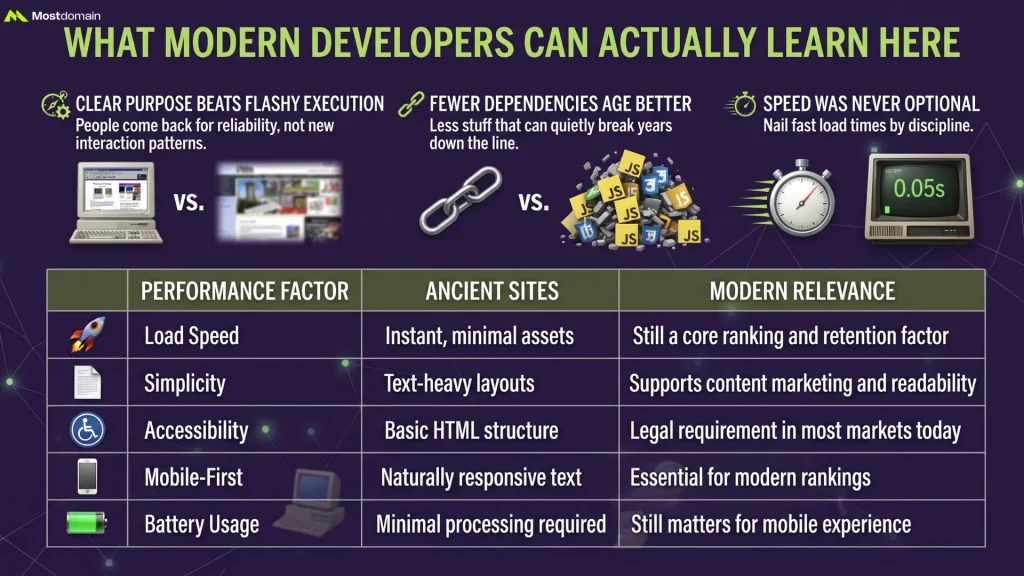
Content that lasts beats chasing whatever design trend is current. Every site on this list has outlived several generations of design fashion by sticking to one clear purpose instead of redesigning every time something new got popular.
A few lessons carry over pretty directly:
- Clear purpose beats flashy execution. People come back for something reliable, not for the newest interaction pattern.
- Fewer dependencies age better. Less stuff that can quietly break years down the line.
- Speed was never optional here. These sites nailed fast load times decades before Core Web Vitals existed as a term, purely because slow connections forced the issue. Worth relearning that discipline on purpose now.
| Performance Factor | Ancient Sites | Modern Relevance |
| Load Speed | Instant, minimal assets | Still a core ranking and retention factor |
| Simplicity | Text-heavy layouts | Supports content marketing and readability |
| Accessibility | Basic HTML structure | Legal requirement in most markets today |
| Mobile-First | Naturally responsive text | Essential for modern rankings |
| Battery Usage | Minimal processing required | Still matters for mobile experience |
Can You Actually Visit These Sites Today?
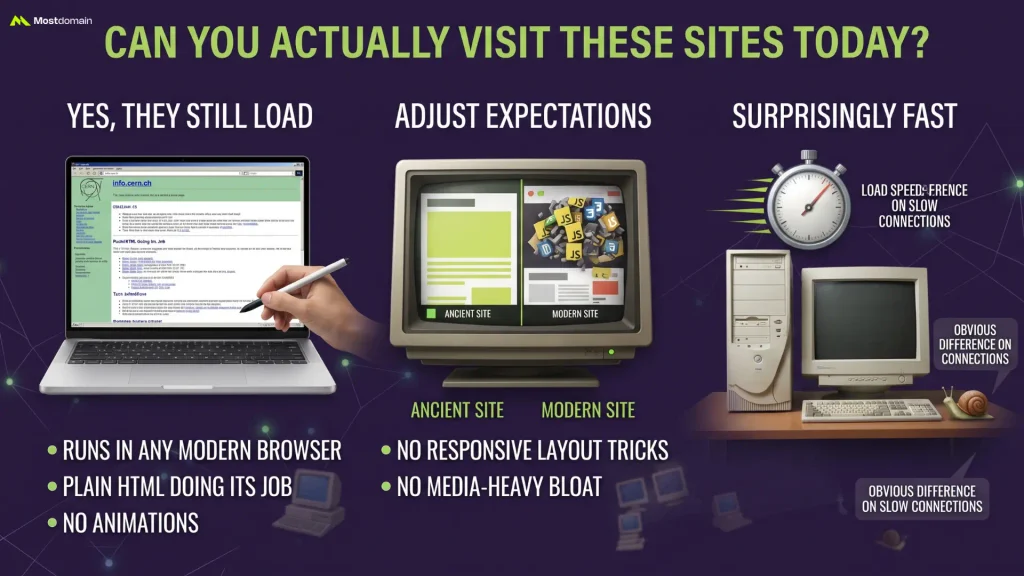
Yes, most of them still load fine in any modern browser. Just adjust your expectations first. No animations, no responsive layout tricks. Plain HTML doing exactly what it was built to do, nothing more.
That plainness tends to load fast, sometimes surprisingly fast compared to the media-heavy sites most people browse day to day now. On a slow connection the difference is obvious within seconds.
FAQ
What is the oldest website still active today?
Info.cern.ch. Tim Berners-Lee launched it August 6, 1991 at CERN, and it’s still the oldest website running online. CERN restored it in 2013 after it had gone offline during the web’s expansion through the 90s.
What is the oldest registered domain name?
Symbolics.com, registered March 15, 1985. It sat without a functioning website for years afterward, since registering a domain and actually building a site on it were two separate things back then.
Is the very first website ever built still online?
It is. Info.cern.ch runs in restored form now, showing roughly the same plain explanation of the World Wide Web project that Berners-Lee originally put up.
How many websites existed in the early 1990s versus now?
One page, back in 1991. Now there are over 1.9 billion websites, a jump from an academic research tool to the backbone of global commerce and everyday communication.
Why did a handful of sites from the 80s and 90s survive when almost everything else disappeared?
Mostly simplicity. Static HTML with no database or CMS dependency means there’s just less that can break as everything around it changes. Hosting costs were basically nothing too, which made long-term preservation cheap even for one person running a personal site.
Can I check how old a domain actually is before buying it?
Yes, a domain age checker pulls the registration history straight from the record. Pair that with a WHOIS lookup to confirm ownership too. Registration date alone doesn’t guarantee an actual website existed the whole time, which matters if you’re evaluating a domain based on its history rather than just its age.
References
- CERN, “The Birth of the Web”
- Wikipedia, “Oldest Websites”
- Wikipedia, “List of the Oldest Currently Registered Internet Domain Names”