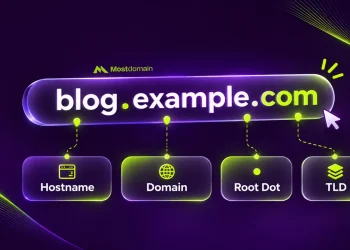

Mostdomain – Buying a domain doesn’t make the name legally yours. A trademark does that instead. Someone else could still register “yourbrand.net”, legally, without asking you first. Founders usually learn this the hard way, right when it matters most. Here’s the full process, start to finish. Costs, timelines, and the rules across four countries, too.
What Does It Mean to Trademark a Domain Name?
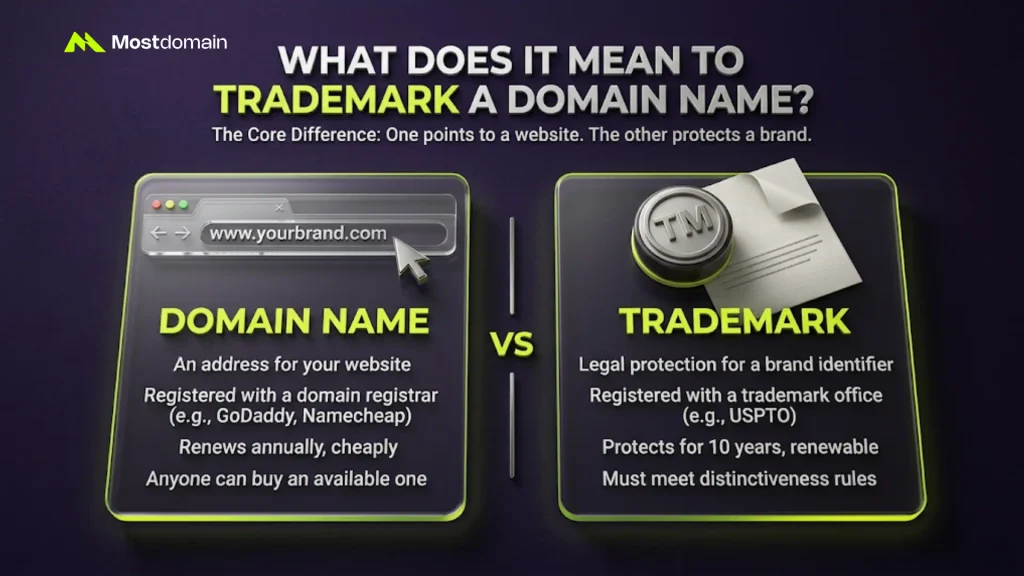
Two words, one big legal gap. Trademarking a domain name means registering its brand name with a trademark office. Not a domain registrar. In the US, that’s the USPTO. Not GoDaddy. Not Namecheap. Once approved, the registration protects the name itself, not the website address.
Domain Name vs Trademark: The Core Difference
One points to a website. The other protects a brand. That’s the whole difference, really.
| Domain Name | Trademark |
|---|---|
| An address for your website | Legal protection for a brand identifier |
| Registered with a domain registrar | Registered with a trademark office |
| Renews annually, cheaply | Protects for 10 years, renewable |
| Anyone can buy an available one | Must meet distinctiveness rules |
Same name, sometimes. Two completely different legal worlds.
Can You Trademark a Domain Name?
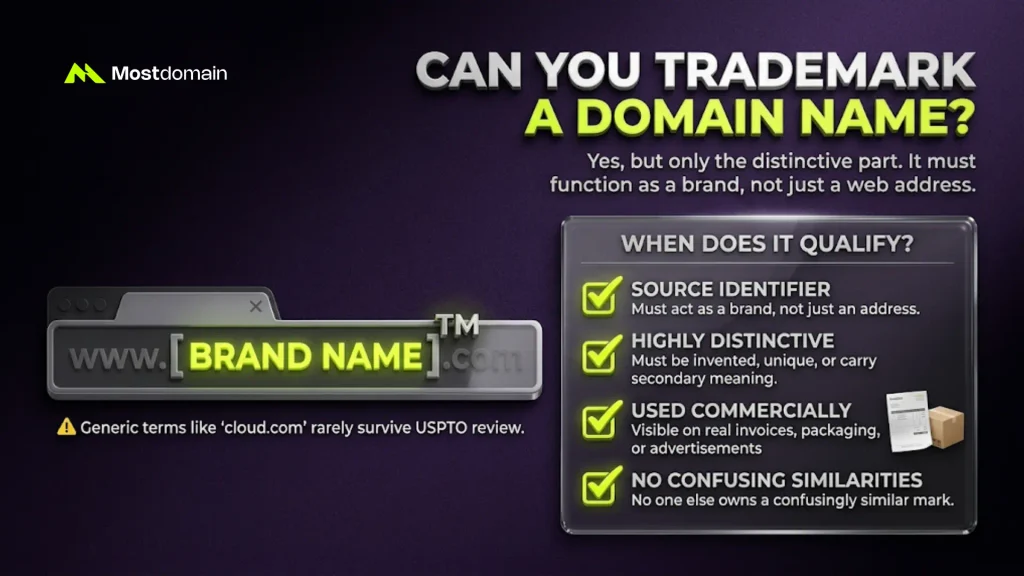
Short answer: yes, but only part of it counts. The distinctive portion matters, not the whole web address. Generic terms like “cloud.com” rarely survive USPTO review. The real test? Would a customer actually see it as a brand.
When a Domain Name Qualifies for Trademark Protection
Not every domain passes. Here’s what actually counts:

- Functions as a source identifier, not just an address
- Distinctive, invented, or carrying secondary meaning by now
- Used commercially, on invoices, packaging, or real ads
- No one else owns a confusingly similar mark nearby
Generic, descriptive, or purely functional names rarely make it.
How to Trademark a Domain Name: Step-by-Step
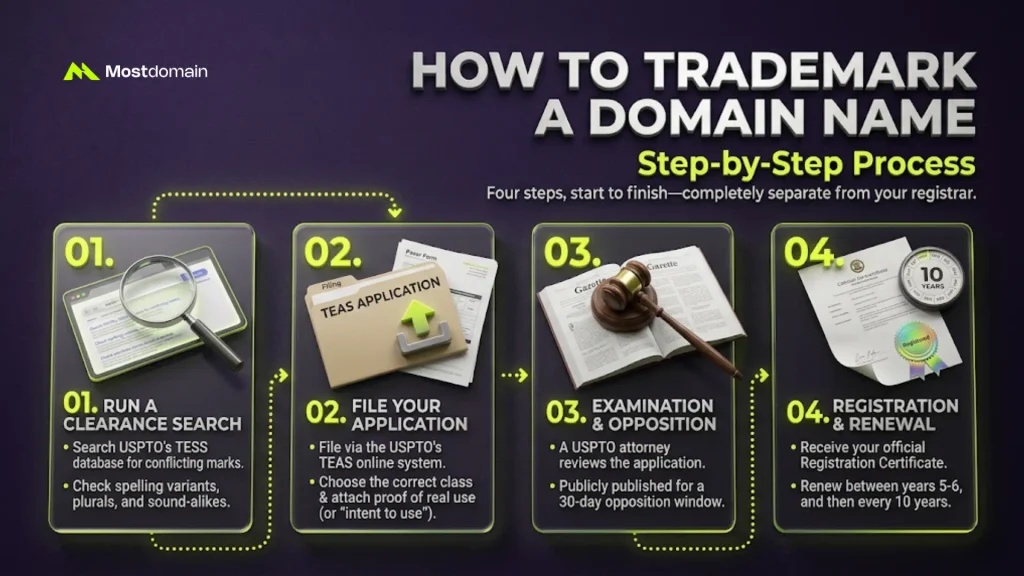
Four steps, start to finish. None of them touch your domain registrar.
Step 1: Run a Clearance Search
First things first: check whether the name’s already taken.




- Run the USPTO’s TESS database for conflicting marks
- Check spellings, plurals, and sound-alikes while you’re at it
- Make sure the name reads as a brand, not a label
Most rejections trace back to skipping this exact step.
Step 2: File Your Trademark Application
Next up: the actual filing, through the USPTO’s TEAS system.
- Pick the right class for your goods or services
- Attach specimens, invoices, screenshots, anything showing real use
- File standard, or “intent to use” if you haven’t launched
Intent-to-use filers get roughly three years to start selling.
Step 3: Examination, Publication, and Opposition
An examining attorney looks at it first. Always.
- Cleared marks move to the Official Gazette next
- That window stays open for thirty straight days
- Anyone can file a formal opposition in that time
Most filings, honestly, sail through without a single objection.
Step 4: Registration and Renewal
Approved? You’ll get an official registration certificate.
- Renew between years 5 and 6, no exceptions
- Then again every 10 years after that
Miss that window, and protection just quietly disappears.
How to Trademark a Domain Name in the US, UK, Canada, and Australia
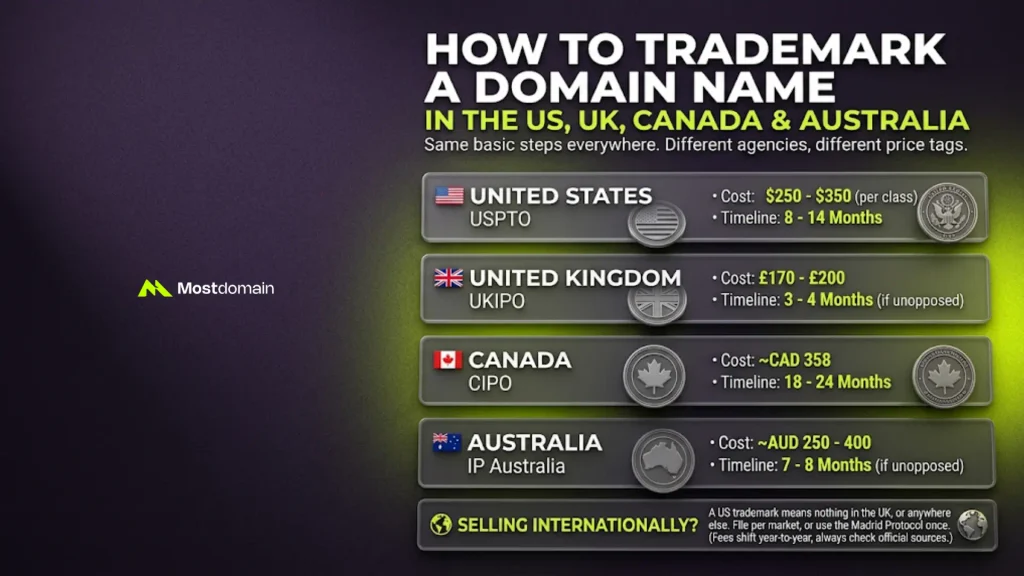
Same basic steps everywhere. Different agencies, different price tags.
| Country | Agency | Typical Cost | Typical Timeline |
|---|---|---|---|
| United States | USPTO | Around 250–350 per class | 8–14 months |
| United Kingdom | UKIPO | Around £170–£200 | 3–4 months, if unopposed |
| Canada | CIPO | Around CAD 358 | 18–24 months |
| Australia | IP Australia | Around AUD 250–400 | 7–8 months, if unopposed |
Fees shift year to year, so always check the source. A US trademark means nothing in the UK, or anywhere else. Selling internationally? File per market, or use the Madrid Protocol once.
Cost and Timeline to Trademark a Domain Name
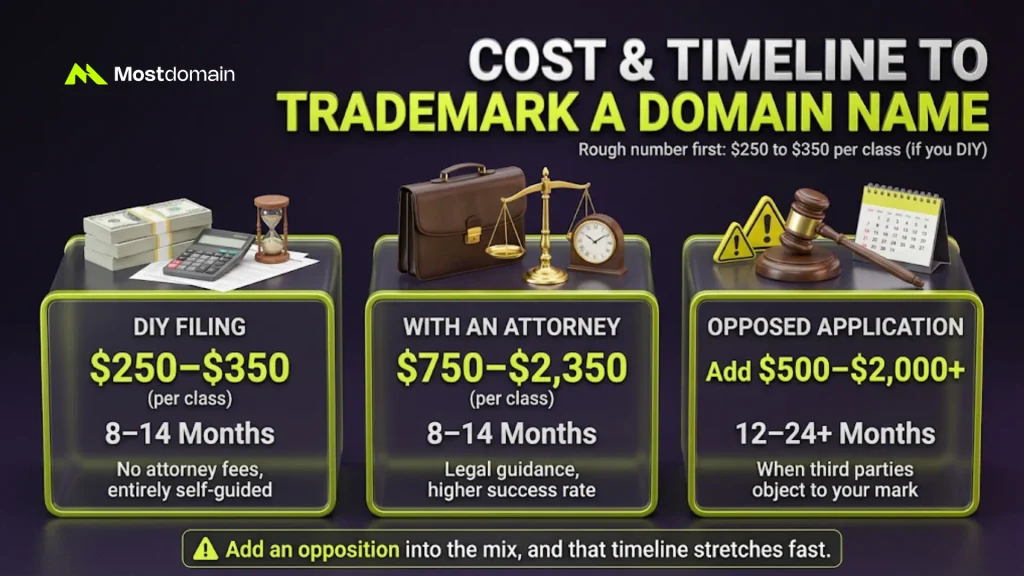
Rough number first: $250 to $350 per class, if you DIY.
| Filing Method | Typical Cost | Typical Timeline |
|---|---|---|
| DIY filing | 250–350 per class | 8–14 months |
| With an attorney | 750–2,350 per class | 8–14 months |
| Opposed application | Add 500–2,000+ | 12–24+ months |
Add an opposition into the mix, and that timeline stretches fast.
Registering a Domain vs Registering It as a Trademark
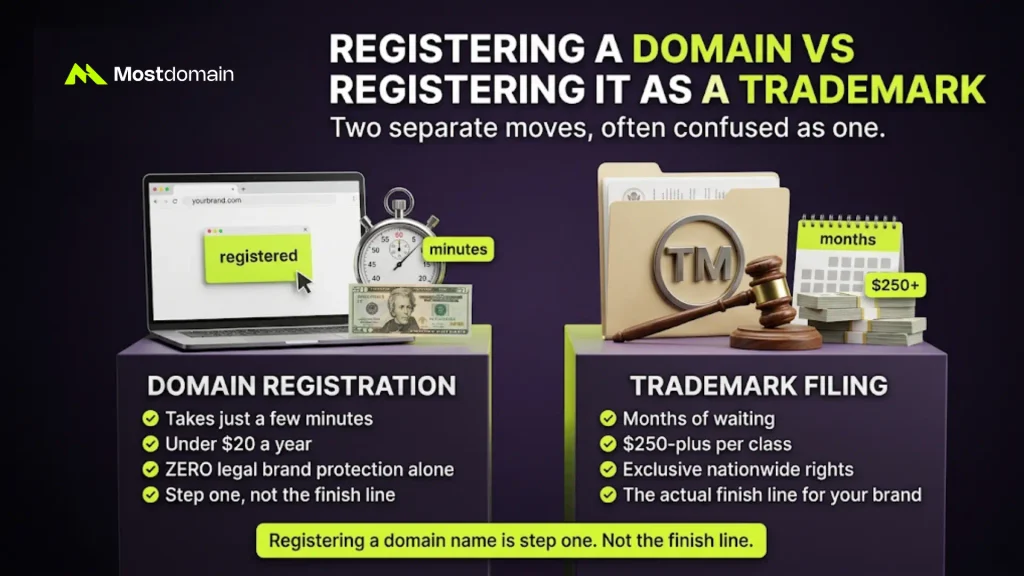
Two separate moves, often confused as one.
- Domain registration: a few minutes, under $20 a year
- Trademark filing: months of waiting, $250-plus per class
- One gives you zero legal brand protection, alone
- The other gives exclusive nationwide rights, once it’s granted
Registering a domain name is step one. Not the finish line.
What Happens If You Skip Trademarking Your Domain Name
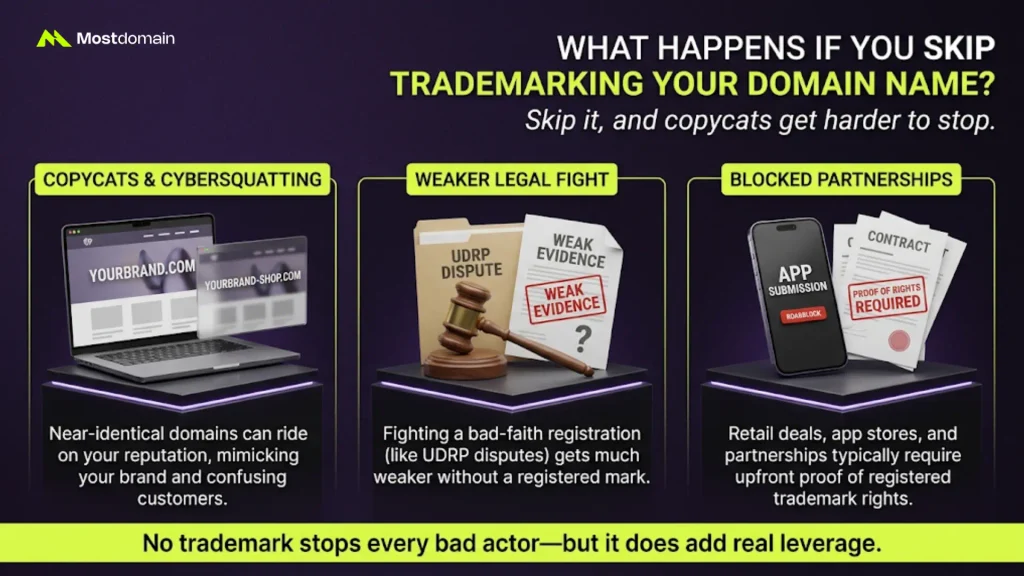
Skip it, and copycats get harder to stop. Simple as that.
- Near-identical domains can ride on your reputation. The pattern is covered in cybersquatting domain names
- Fighting a bad-faith registration gets weaker without a mark. The UDRP dispute process spells out exactly what’s needed
- Retail deals, app stores, partnerships: most want proof of rights upfront
No trademark stops every bad actor. It does add real leverage, though.
FAQ
Can I trademark a domain name myself, without a lawyer?
Sure, self-filing through TEAS works for clearly distinctive names. Anything close to an existing mark deserves a lawyer’s eyes first.
Does trademarking stop someone from buying a similar domain?
Not on its own, no. It gives you legal standing to fight that registration later. Through a dispute, or in court.
Can I trademark a domain name I haven’t launched yet?
Yes, through an intent-to-use filing. Real commercial use has to start within about three years.
Is trademarking a domain the same as trademarking a business name?
Often, when the two match exactly. Examiners care about function, not the original format.
Does a trademark give me the matching domain automatically?
Nope. You’d still register or buy that company domain name separately. That part still runs through a registrar.
Does my domain have to match my trademarked business name exactly?
Not really, though it helps with consistency. Full breakdown here: whether your domain name has to match your business name.
References
- United States Patent and Trademark Office, Trademark Process
- FindLaw, Registering for a Domain Name Trademark: What You Should Know
- GoDaddy Resources, Domain Name Trademark
- Wix Blog, When, Why and How to Trademark a Domain Name
- LegalZoom, How to Trademark a Name