Mostdomain – A high Ahrefs ranking can turn an ordinary domain into something buyers fight over. Not every seller realizes this until the first real offer lands, usually lower than expected, because the metrics weren’t presented clearly enough to justify the asking price. This guide walks through Domain Rating, backlink quality, and traffic history, then shows how to price, present, and close the sale.
What Is a High Ahrefs Ranking for a Domain?
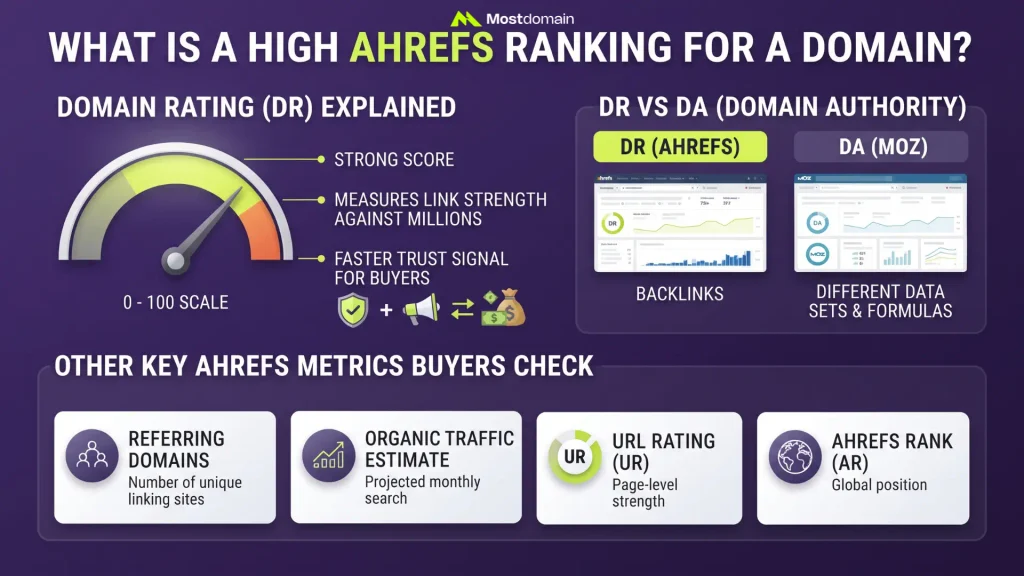
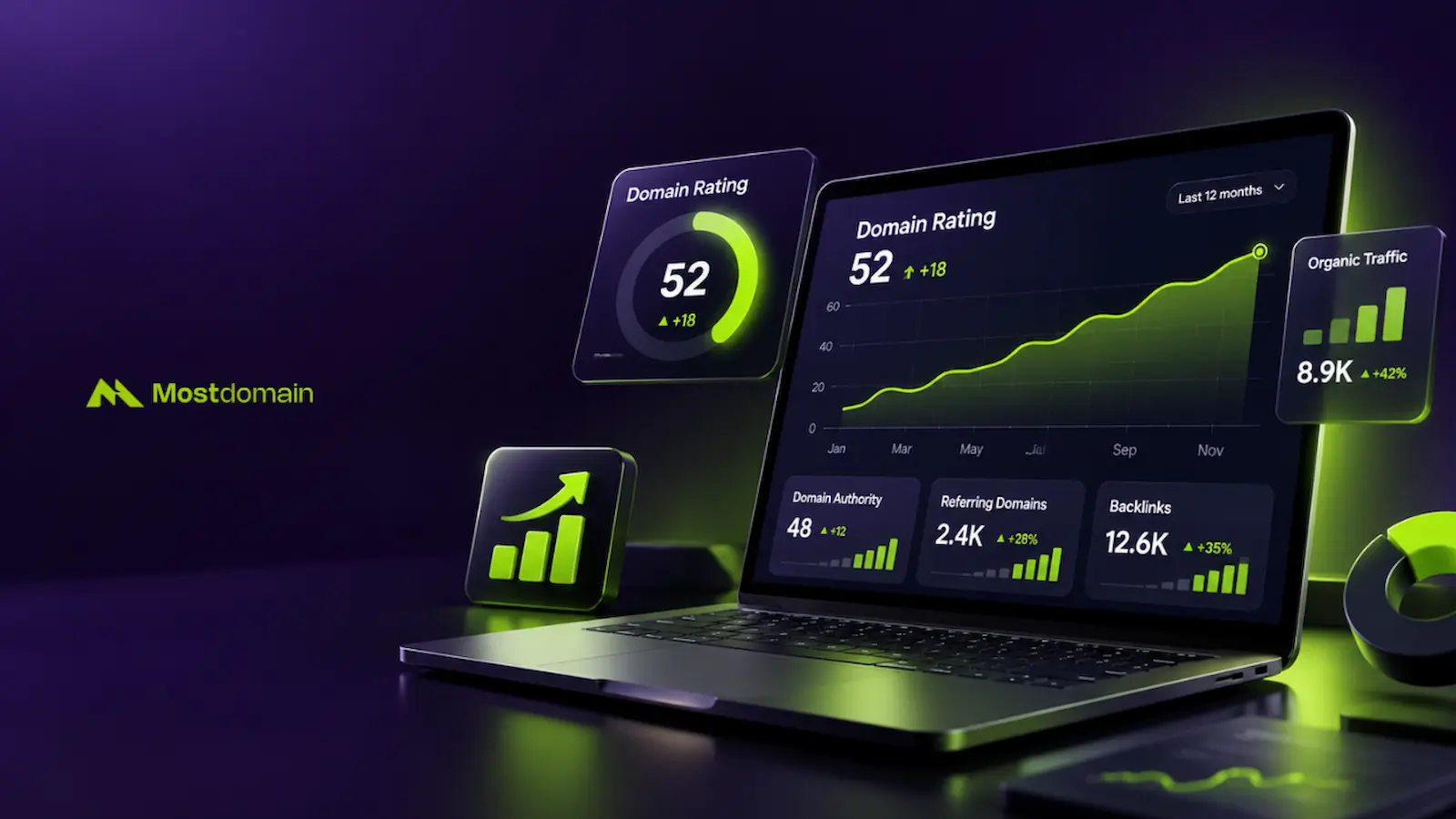
A high Ahrefs ranking means a domain carries a strong Domain Rating score. DR runs on a 0 to 100 scale, built from backlinks, and it measures that strength against millions of other domains. It doesn’t guarantee Google rankings on its own.
DR and DA get confused constantly, partly because both numbers look similar on a dashboard. The difference between DR and DA matters more than most sellers assume. Buyers still treat DR as the fastest trust signal they have, though, and that’s exactly why it shows up first in almost every negotiation.
Domain Rating vs Domain Authority
DR comes from Ahrefs. DA comes from Moz. Both estimate backlink strength, but the data sets and the formulas behind them aren’t the same, which is why a domain can look strong on one and merely average on the other.
Other Ahrefs Metrics Buyers Check
DR rarely stands alone. Experienced buyers pull up at least three other numbers before they even consider an offer:
- Referring Domains: how many separate sites link in, not raw backlink count
- Organic Traffic Estimate: Ahrefs’ projected monthly search traffic
- URL Rating (UR): a page-level version of DR, useful for single-page domains
- Ahrefs Rank (AR): the domain’s position against every other site Ahrefs tracks
Why a High DR Increases a Domain’s Resale Value
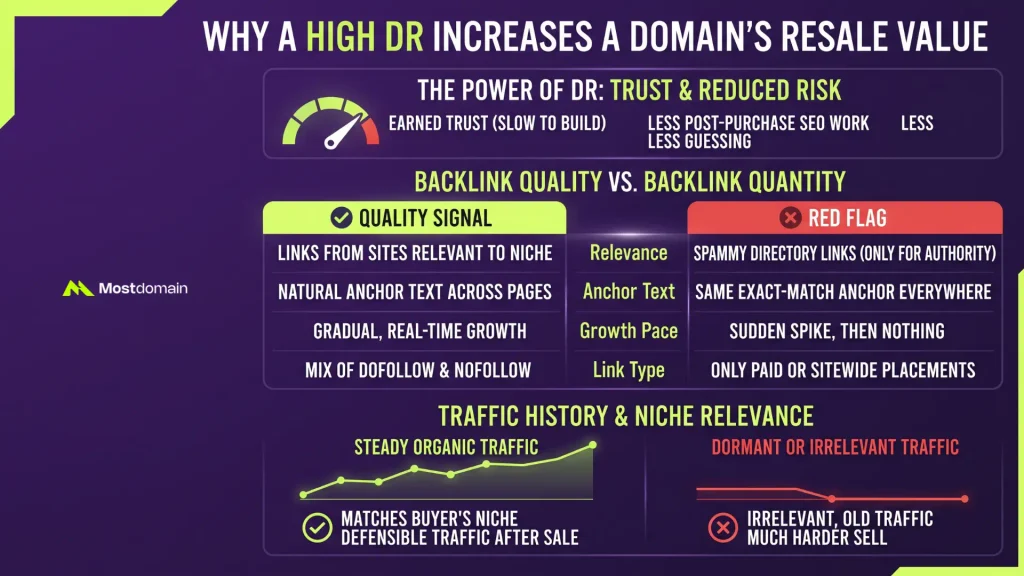
A high DR signals years of earned trust, the kind that’s slow to build and nearly impossible to fake convincingly. Buyers read that signal as less post-purchase SEO work. Less guessing, too.

Backlink Quality vs Backlink Quantity
Quality beats raw link count, and most buyers who’ve been burned before know exactly why.
| Quality Signal | Red Flag |
| Links from sites that are actually relevant to the niche, not just high-DR for its own sake | Spammy directory links that exist only to pass authority |
| Anchor text that reads naturally across different pages | The same exact-match anchor, repeated everywhere |
| Growth that happened gradually, over real time | A sudden spike, then nothing |
| A mix of dofollow and nofollow | Only paid or sitewide placements |
Buyers who understand backlinks check this before anything else. Everyone else finds out the hard way, usually after the sale.
Traffic History and Niche Relevance
A domain with steady organic traffic tends to move faster. Traffic that actually matches the buyer’s niche is worth even more than the raw number suggests, because relevance is what makes that traffic defensible after the sale closes. A dormant domain, dragging old and irrelevant traffic behind it, is a much harder sell.




How to Price a Premium Domain with High Ahrefs Metrics
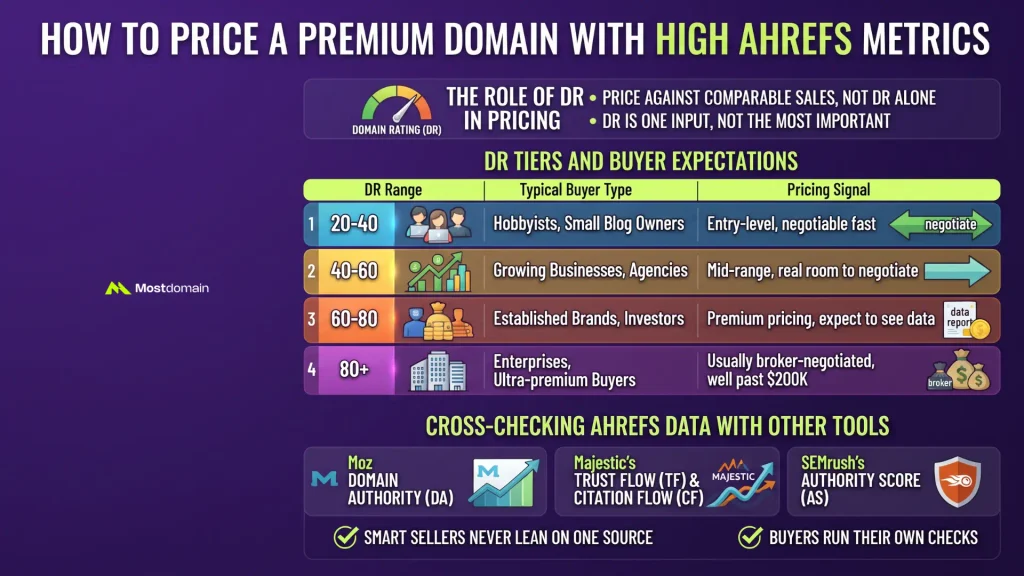
Price a high-DR domain against comparable sales, not against DR in isolation. DR is one input. Not the only one, and rarely even the most important one once a serious buyer starts asking questions.
DR Tiers and Buyer Expectations
| DR Range | Typical Buyer Type | Pricing Signal |
| 20 to 40 | Hobbyists and small blog owners testing an idea | Entry-level, and negotiable fast |
| 40 to 60 | Growing businesses and agencies that need credibility quickly | Mid-range, with real room to negotiate |
| 60 to 80 | Established brands and domain investors who know the market | Premium pricing, and they expect to see the data behind it |
| 80 and above | Enterprises, plus the handful of ultra-premium buyers who move slowly | Usually broker-negotiated, often well past $200K |
NameBio helps confirm whether a price is fair, assuming the comparables are recent enough to matter. A full domain valuation walkthrough goes further than DR alone ever could.
Cross-Checking Ahrefs Data with Other Tools
Smart sellers never lean on one data source alone. Not anymore. Too many buyers now run their own checks before they’ll even reply to an offer.
- Moz Domain Authority, still widely quoted despite its own quirks
- Majestic’s Trust Flow and Citation Flow
- SEMrush’s Authority Score, a newer number some buyers trust more than DR
This guide to free backlink checker tools covers more of them, free ones included.
Where to Sell a Premium Domain with High Ahrefs Ranking
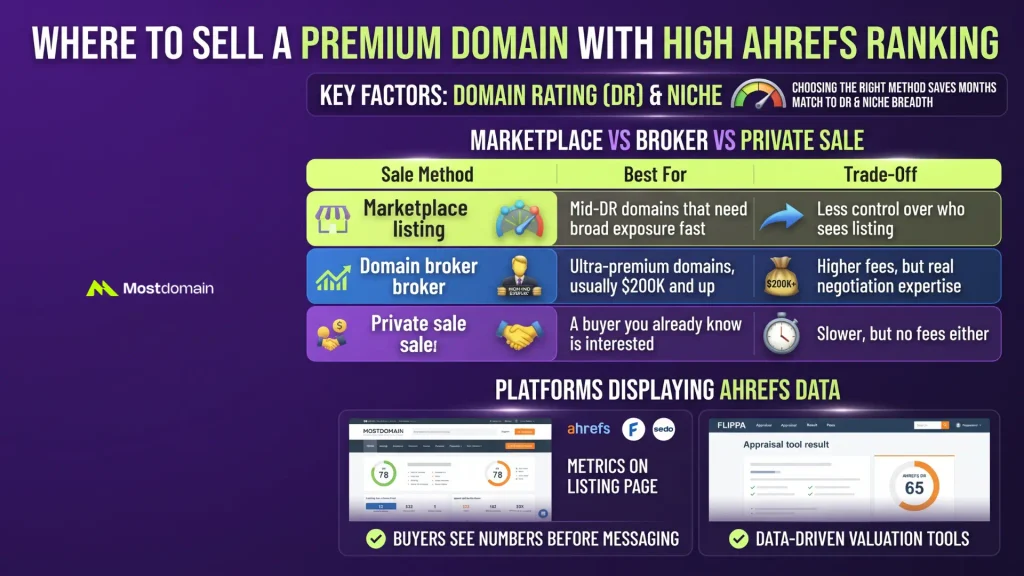
Marketplaces, brokers, and private sales each fit a different kind of domain, and picking the wrong one wastes months. The right choice usually comes down to two things: the domain’s DR, and how narrow its niche really is.
Marketplace vs Broker vs Private Sale
| Sale Method | Best For | Trade-Off |
| Marketplace listing | Mid-DR domains that need broad exposure fast | Less control over who actually sees the listing |
| Domain broker | Ultra-premium domains, usually $200K and up | Higher fees, but real negotiation expertise |
| Private sale | A buyer you already know is interested | Slower, but no fees either |
MostDomain puts Ahrefs metrics right on the listing page, so buyers see the numbers before they even message. Flippa and Sedo’s appraisal tool work the same way. Still deciding between flipping and holding? What domain flipping actually involves is worth reading first, before the metrics even enter the conversation.
How to Present Ahrefs Data to Buyers
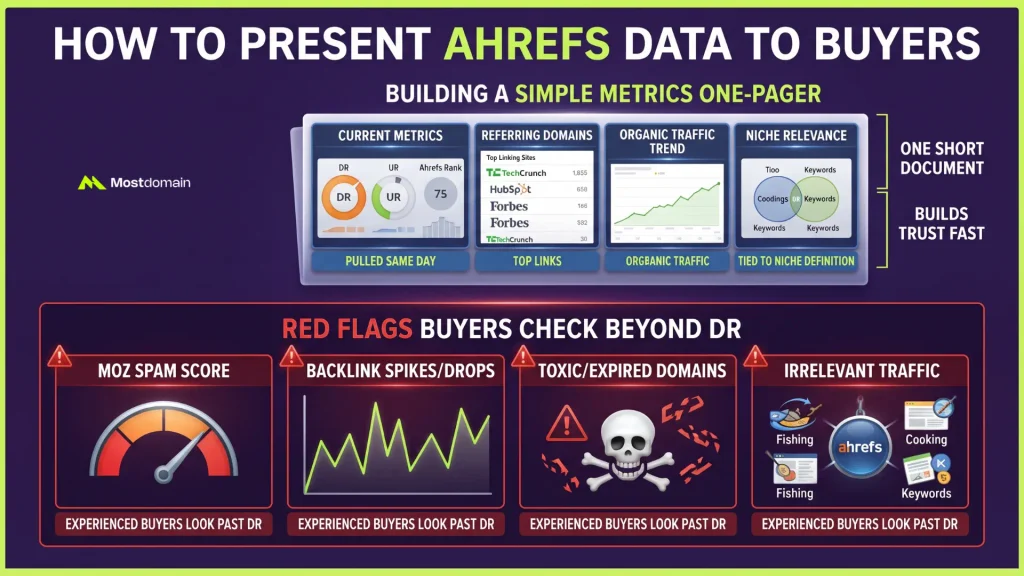
A clear metrics summary builds trust faster than any pitch. Buyers shouldn’t have to dig through Ahrefs themselves to confirm what you’re telling them.
Building a Simple Metrics One-Pager
Include these in one short document, nothing longer:
- Current DR, UR, and Ahrefs Rank, pulled the same day you send it
- Referring domains, with the top few linking sites named
- An organic traffic trend, screenshot included, not just a claim
- Niche relevance and keyword overlap, tied back to how you define your niche
Red Flags Buyers Check Beyond DR
Experienced buyers look past the headline number almost immediately.
- Spam Score from Moz
- Sudden backlink spikes, or sudden drops
- Toxic or expired domains still sitting in the link profile
- Traffic that doesn’t actually match the niche being sold
Common Mistakes When Selling High-DR Domains
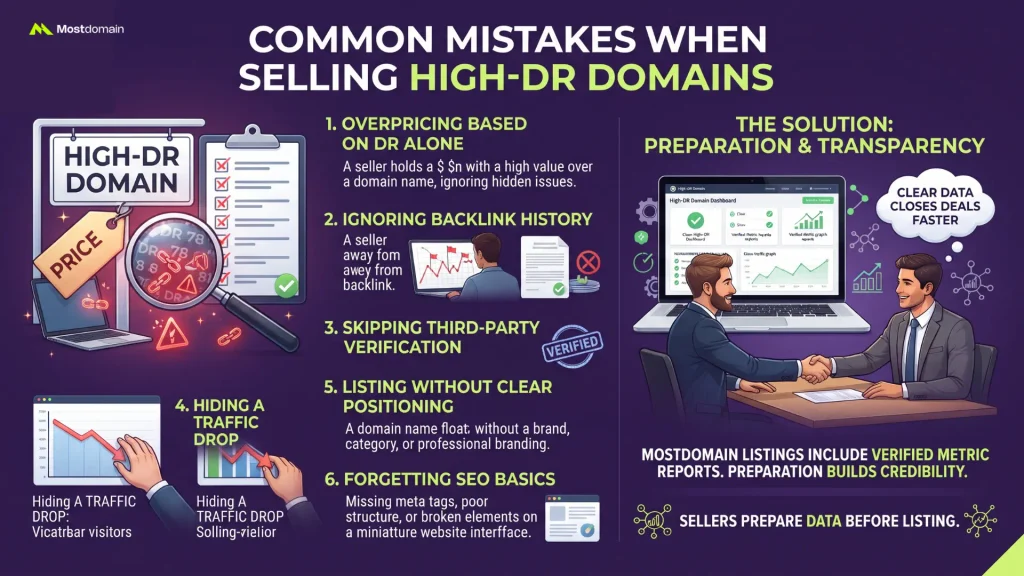
Overpricing based on DR alone is the single most common mistake, and it’s an expensive one. A high DR with a toxic backlink history scares off exactly the buyers who’d otherwise pay full price.
- Ignoring backlink history before listing, and hoping nobody checks
- Skipping third-party verification entirely
- Hiding a traffic drop instead of explaining it upfront
- Listing without clear premium domain name positioning
- Forgetting the basics covered in domain SEO basics, which buyers notice fast
MostDomain listings include verified metric reports on every domain. That alone builds more credibility than most sellers realize.
Selling a high-DR domain takes preparation, not luck, and the preparation is almost always the part sellers skip. Clear data closes deals faster than persuasion ever does. Current high-DR listings on MostDomain show this in practice, if it helps to see real examples first.
FAQ
Is a high DR domain always worth more money?
Not always. Backlink quality and niche relevance carry just as much weight, sometimes more. A clean DR 50 can outsell a messy DR 70.
Can I sell a domain with DR but no traffic?
Yes, though the price will reflect that missing signal. Buyers notice the gap fast.
What DR is considered premium?
Most investors draw the line around DR 60. Below that, it’s still sellable, just priced differently.
Do brokers only handle ultra-premium domains?
Not exclusively, but that’s where they add the most value. Above $200,000, their fee pays for itself.
Should I disclose a traffic drop to buyers?
Yes. Hiding it costs more trust than the drop itself ever would.
Does domain age affect Ahrefs DR?
Indirectly, mostly through time. Older domains tend to accumulate more backlinks simply by existing longer. Domain age and SEO covers the rest of that relationship.
Where can I verify comparable domain sales?
NameBio is the usual starting point. Marketplace sold-listings work too, and they’re often more current.
References
- Ahrefs, Domain Rating: What It Is & What It’s Good For
- Ahrefs Help Center, What Is Domain Rating (DR)?
- Clarivate, Selling High Profile Domains
- Dynadot Help Center, How Do I Sell a Domain Using Dynadot’s Brokerage Service?
- Elementor, How to Sell a Domain Name for Profit