
WHOIS Lookup: Understanding Domain Information – In the digital age, WHOIS Lookup serves as a fundamental tool for extracting domain registration information where every website functions as a gateway to information, commerce, or social interaction. This protocol provides valuable insights into domain ownership, registration details, and technical specifications, making it essential for IT professionals, cybersecurity experts, marketers, and curious internet users.
The significance of WHOIS Lookup extends beyond mere curiosity; it functions as a vital resource for verifying domain legitimacy, tracking intellectual property issues, or conducting investigative research. This article explores WHOIS Lookup’s purpose, methodology, challenges, and future trends, empowering users to navigate the domain landscape intelligently.
What Is WHOIS Lookup? An Introduction to Domain Data Retrieval
WHOIS Lookup is an online protocol that retrieves registration data about a domain name from publicly accessible databases maintained by domain registrars and registries. When you perform a WHOIS Lookup, the system queries these repositories, delivering information about domain owner, contacts, registration dates, and hosting infrastructure.
This process resembles a digital passport check, offering transparency into who operates a domain and provides vital operational details. WHOIS Lookup remains the first line of inquiry for verifying domain authenticity or conducting due diligence, embodying a cornerstone of internet governance.
Key Information Retrieved Through WHOIS Lookup
| Data Type | Information Provided |
| Domain Owner | Registrant name and organization |
| Contact Details | Administrative and technical contacts |
| Registration Dates | Creation, update, and expiration dates |
| Name Servers | DNS server information |
| Registrar | Company managing the domain registration |
| Domain Status | Active, locked, or pending transfer |
Beyond functional value, WHOIS Lookup reveals patterns about domain ownership trends and regional registries. Understanding how data is stored and accessed enhances interpretation accuracy, serving as a gateway to the interconnected infrastructure sustaining the modern internet.
How to Perform a WHOIS Lookup: Tools, Techniques, and Best Practices
Performing a WHOIS Lookup is straightforward thanks to dedicated websites, command-line utilities, and APIs designed for rapid querying. Popular online services offer user-friendly interfaces where users input a domain name and receive detailed information instantly.
Practitioners must stick to best practices, ensuring accurate interpretation and compliance with privacy policies. Some registrars restrict automated queries, so respecting privacy rules is essential when combining WHOIS data with DNS records and SSL certificates.

Effective WHOIS Lookup Strategies:
✓ Verify Multiple Sources
Cross-reference WHOIS data with DNS records and SSL certificates for comprehensive validation
✓ Understand Privacy Limitations
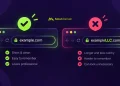



Recognize that privacy protection services may mask actual registrant information
✓ Use Reputable Tools
Stick to established lookup services from recognized domain registrars or organizations
✗ Avoid Over-Reliance
Don’t depend purely on WHOIS data; supplement with additional investigative methods
✗ Ignore Legal Boundaries
Respect privacy laws and terms of service when conducting lookups
Combining WHOIS Lookup data with other sources like DNS records and SSL certificates yields a holistic picture of domain legitimacy. Understanding limitations and legal implications is critical, as privacy emphasis has led to widespread masking of personal details.
The Challenges and Limitations of WHOIS Lookup
Despite its utility, WHOIS Lookup faces several notable challenges impacting reliability. Privacy laws like General Data Protection Regulation (GDPR) have significantly limited visibility of personal ownership information. Many registrars now anonymize domain ownership details, creating opacity that complicates direct identification.
The rise of privacy protection services means results often show proxy contacts rather than actual registrants. Additionally, data accuracy issues exist as registrants can update information with intentional inaccuracies to evade detection or avoid spam.
Technical inconsistency across registries presents another concern. While some databases update in real time, others lag with outdated information. Cybercriminals exploit these gaps, registering domains with false data to mask illegal activities.
Key Challenges:
- Privacy regulations limiting data visibility
- Anonymous registration services masking ownership
- Data accuracy and intentional misinformation
- Technical inconsistencies across registries
- Exploitation by malicious actors
An understanding of these limitations is essential for users relying on WHOIS Lookup for decision-making or security purposes. The tool remains valuable but must be part of a broader investigative approach.
Future Trends and Innovations in WHOIS Lookup
Looking ahead, WHOIS Lookup is ready for transformative changes driven by technological innovation and evolving privacy frameworks. To balance privacy with accountability, new protocols like Registration Data Access Protocol (RDAP) are being developed, offering standardized and privacy-compliant mechanisms for domain data retrieval.
Artificial intelligence and machine learning are beginning to enhance WHOIS Lookup capabilities. Tools using AI analyze patterns across many data sources to detect fake domains more efficiently than human-led processes.
Laws in many countries will keep influencing how clearly we can see domain data. The future of WHOIS will be a system that carefully balances transparency, privacy, security, and new ideas.
Emerging Technologies:
- Registration Data Access Protocol (RDAP) for standardized queries
- AI and machine learning for pattern detection and fraud identification
- Blockchain-based decentralized domain registries
- Enhanced security protocols for data access
- Privacy-preserving verification methods
These innovations promise more reliable and ethically responsible tools for understanding domain information. Users gain better capabilities while respecting privacy rights in the evolving digital landscape.
Why WHOIS Lookup Remains Essential in the Digital Era
WHOIS Lookup is a vital gateway into the underlying structures of the internet, offering insights invaluable for security, verification, and understanding domain history. While it remains a powerful tool, ongoing privacy regulations and technological advancements continue shaping its evolution.
The future promises innovations making WHOIS Lookup even more secure and adaptive, reflecting the dynamic nature of cyberspace. Whether you’re a cybersecurity professional or business owner, mastering WHOIS Lookup techniques provides essential capabilities in today’s interconnected digital world.
Build Your Authority on Verifiable Data
The integrity of your digital asset starts with WHOIS transparency. A successful website starts with a verified, strong domain.
Most Domain Premium Collection offers exclusive aged domains, each with a history and proven value you can verify using WHOIS data:
✅ Verifiable History: Check the original registration dates and ownership history for full due diligence.
✅ SEO-ready Foundation: Built-in credibility and authority from day one.
✅ A Valuable Asset: A domain whose worth is backed by its transparent, long-term history.
Check our premium domain collection before they’re gone →
Need help choosing the right aged domain? Contact our admin on Telegram: @mostdomain_cs
References
- ICANN WHOIS Policy and Implementation Documentation
- General Data Protection Regulation (GDPR) and Domain Privacy Guidelines
- Registration Data Access Protocol (RDAP) Technical Specifications
- Domain Name System Security Extensions (DNSSEC) Standards
- Cybersecurity and Infrastructure Security Agency Domain Security Best Practices
- Internet Engineering Task Force (IETF) WHOIS Protocol Standards