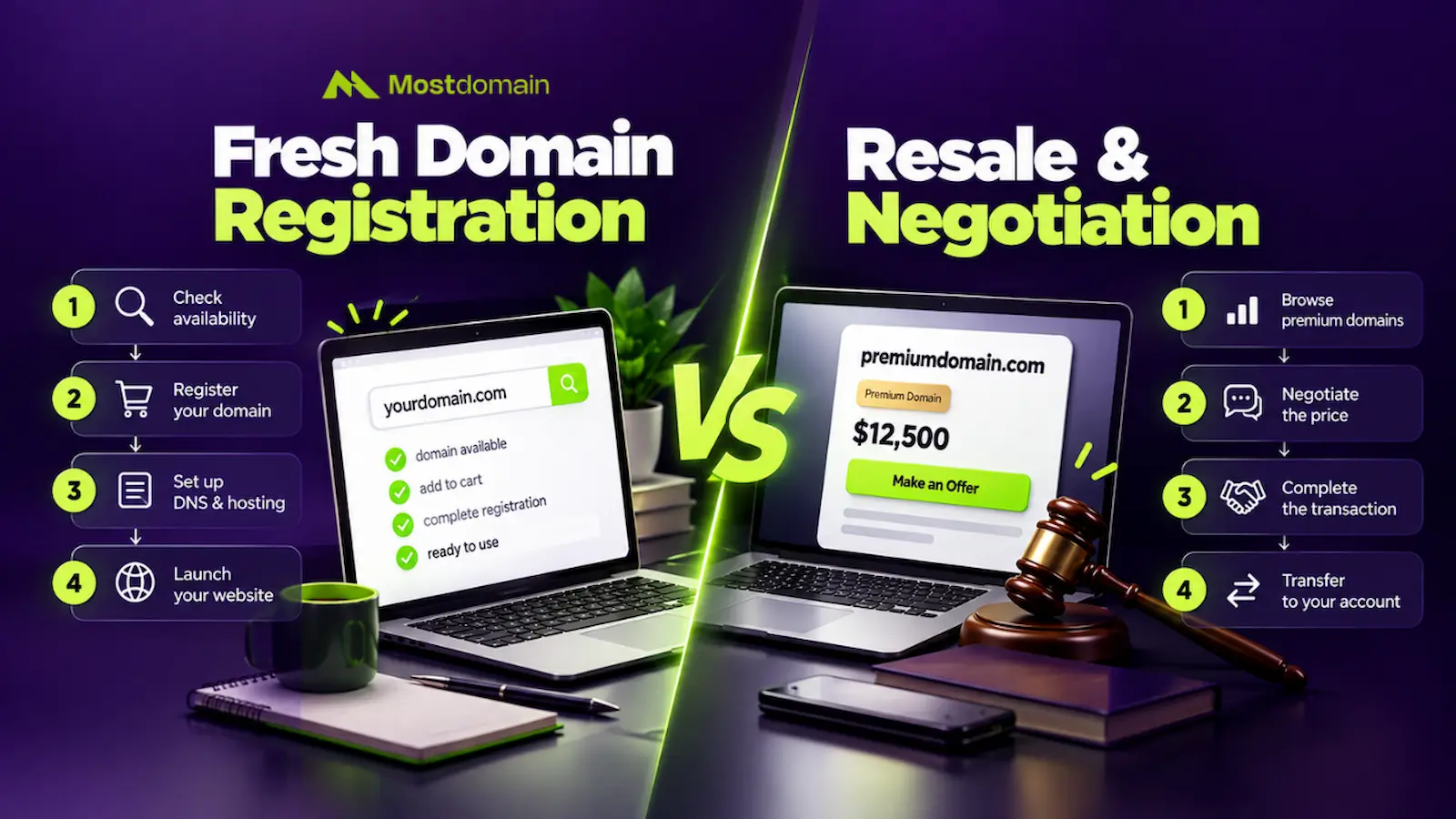
Two markets sell domain names, and they work almost nothing alike. The primary market sells names nobody has registered yet, at a fixed fee. The aftermarket resells names someone already owns, at whatever price a negotiation lands on.
Most buyers only discover the difference once their first-choice name is taken. This guide covers both markets in full, with real numbers behind the comparison.
Key Takeaways
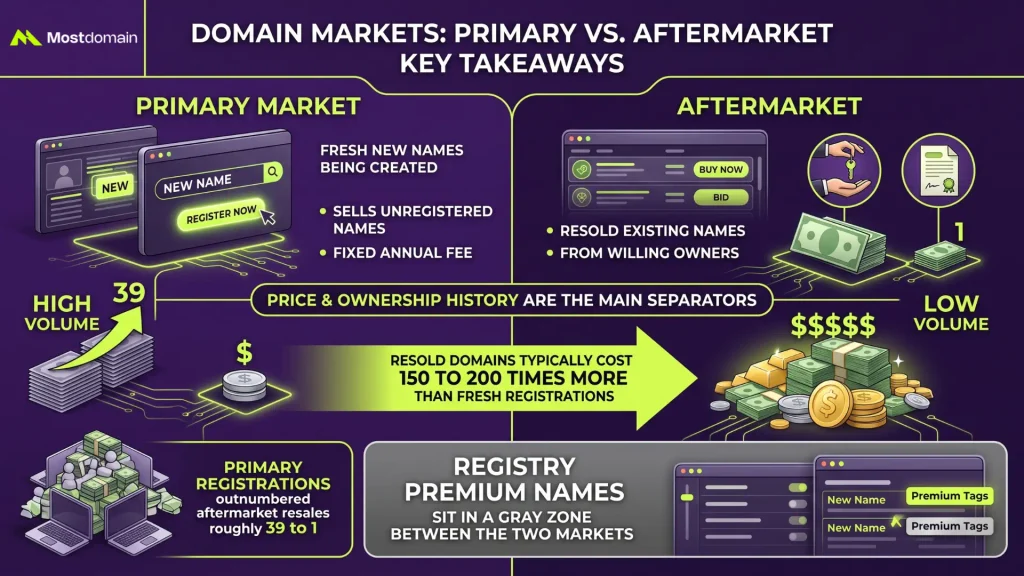
Price and ownership history separate these two markets more than anything else.
- The primary market sells unregistered names at a fixed annual fee.
- The aftermarket resells names an existing owner is willing to give up.
- In 2020, primary registrations outnumbered aftermarket resales roughly 39 to 1.
- Resold domains typically cost 150 to 200 times more than fresh registrations.
- Registry premium names sit in a gray zone between the two markets.
What Is the Primary Domain Market?
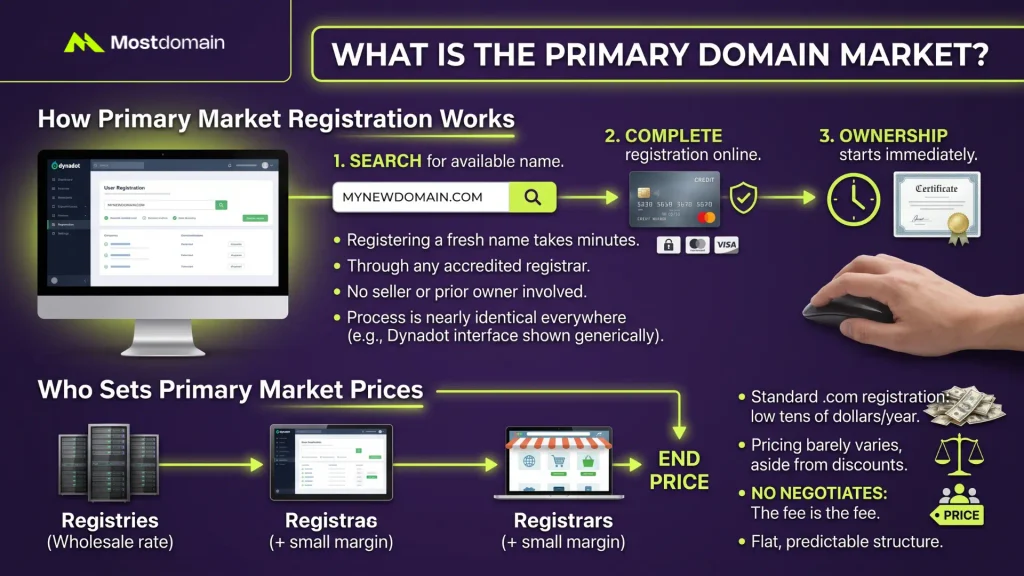
The primary domain market is where unregistered names get registered for the first time.
How Primary Market Registration Works
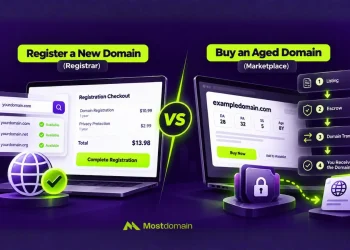
Registering a fresh name takes minutes, through any accredited registrar.
- You search for an available name, then complete the registration online.
- Ownership starts immediately. No seller or prior owner is involved at all.
- The process is nearly identical everywhere, whether you use Namecheap, Dynadot, or GoDaddy.
- Full mechanics of this process live in our registering a domain name guide.
Who Sets Primary Market Prices
Registries set the wholesale rate, and registrars add a small margin on top.

- A standard .com registration runs somewhere in the low tens of dollars a year.
- Pricing barely varies between registrars, aside from promotional first-year discounts.
- Nobody negotiates here. The fee is the fee, take it or leave it.
- That flat, predictable structure is the primary market’s whole appeal.
What Is the Domain Aftermarket?
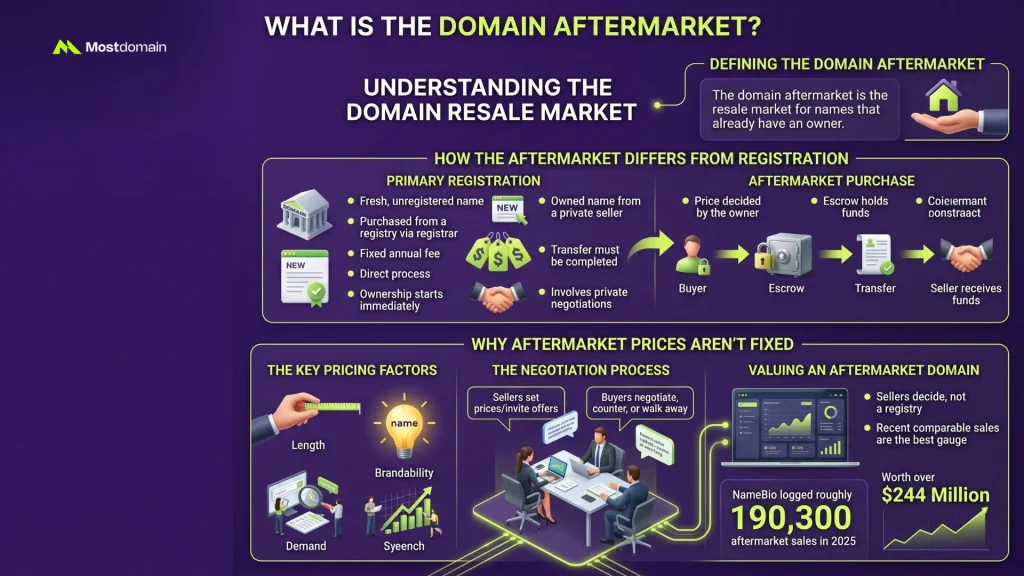
The domain aftermarket is the resale market for names that already have an owner.
How the Aftermarket Differs From Registration
Unlike a fresh registration, an aftermarket purchase involves a real, private seller.
- The seller sets a price, or invites offers from interested buyers.
- Escrow typically holds the payment until the transfer actually completes.
- We cover this whole process in our guide on how the domain aftermarket works.
Why Aftermarket Prices Aren’t Fixed
Because a person, not a registry, decides what an aftermarket name costs.



- Sellers price based on length, brandability, and existing demand.
- Buyers negotiate, counter, or simply walk away if the number feels wrong.
- NameBio logged roughly 190,300 aftermarket sales in 2025, worth over $244 million.
- Recent comparable sales are the best gauge of what a name is actually worth.
Primary Market vs Aftermarket: Side-by-Side Comparison
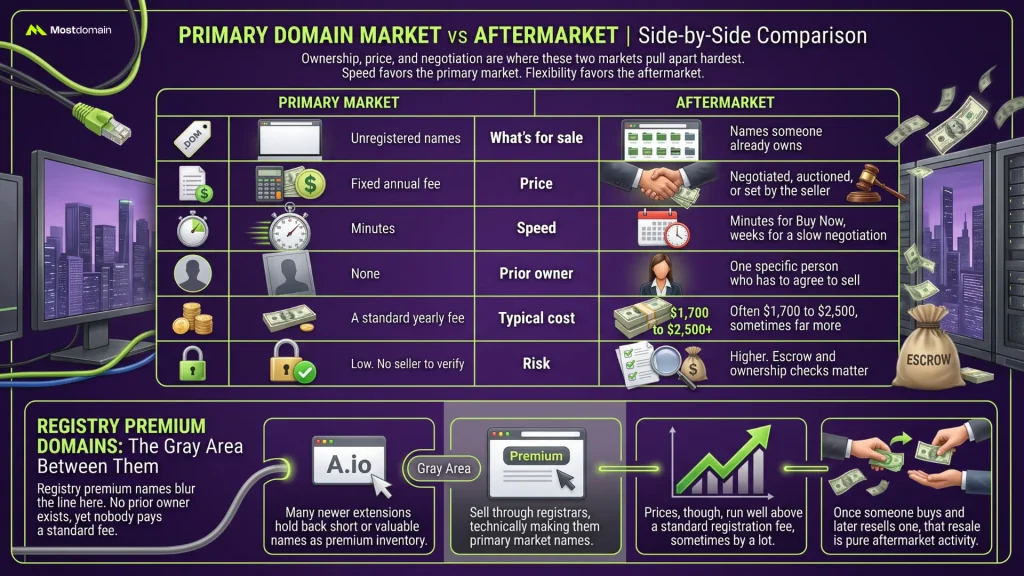
Ownership, price, and negotiation are where these two markets pull apart hardest.
Comparison Table by Price, Speed, and Risk
Speed favors the primary market. Flexibility favors the aftermarket.
| Factor | Primary market | Aftermarket |
| What’s for sale | Unregistered names | Names someone already owns |
| Price | Fixed annual fee | Negotiated, auctioned, or set by the seller |
| Speed | Minutes | Minutes for Buy Now, weeks for a slow negotiation |
| Prior owner | None | One specific person who has to agree to sell |
| Typical cost | A standard yearly fee | Often $1,700 to $2,500, sometimes far more |
| Risk | Low. No seller to verify | Higher. Escrow and ownership checks matter |
Registry Premium Domains: The Gray Area Between Them
Registry premium names blur the line here. No prior owner exists, yet nobody pays a standard fee.
- Many newer extensions hold back short or valuable names as premium inventory.
- These sell through registrars, technically making them primary market names.
- Prices, though, run well above a standard registration fee, sometimes by a lot.
- Once someone buys and later resells one, that resale is pure aftermarket activity.
- Our premium domain names guide breaks down this category further.
How Big Is Each Market?
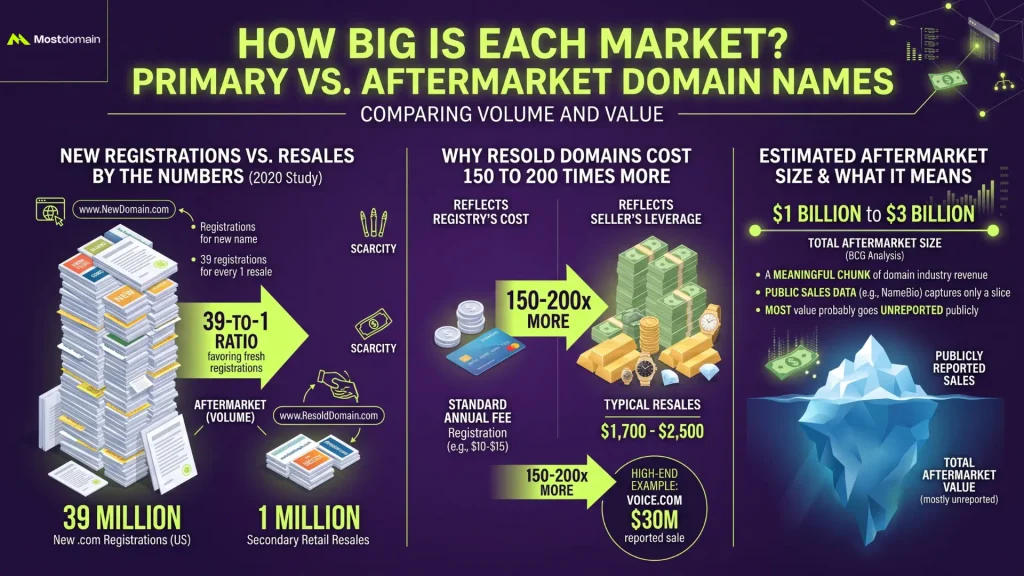
The primary market dwarfs the aftermarket in volume. The aftermarket wins on dollar value per sale, though.
New Registrations vs Resales by the Numbers
Roughly 39 registrations happened for every 1 resale, according to a 2020 study.
- BCG’s research found 39 million new .com registrations for 2020, in the US.
- The same study counted only about 1 million secondary retail resales that year.
- That works out to a rough 39-to-1 ratio favoring fresh registrations.
- Good names simply don’t come up for resale that often, relative to demand.
Why Resold Domains Cost 150 to 200 Times More
Scarcity is the reason. Only one seller controls the exact name you want.
- BCG found typical resales priced between $1,700 and $2,500.
- That’s roughly 150 to 200 times a standard annual registration fee.
- High-end sales push the multiple even further. Voice.com reportedly sold for $30 million.
- A registration fee reflects the registry’s cost. A resale price reflects one seller’s leverage.
Estimated Aftermarket Size and What It Means
Estimates put the aftermarket’s total size somewhere between $1 billion and $3 billion.
- That range comes from BCG’s analysis of the secondary retail dot-com market.
- Even the low end still represents a meaningful chunk of domain industry revenue.
- Public sales data, like NameBio’s, likely captures only a slice of this total.
- Most of the aftermarket, by dollar value, probably never gets reported publicly.
Is the Secondary Market Becoming the Primary Market?
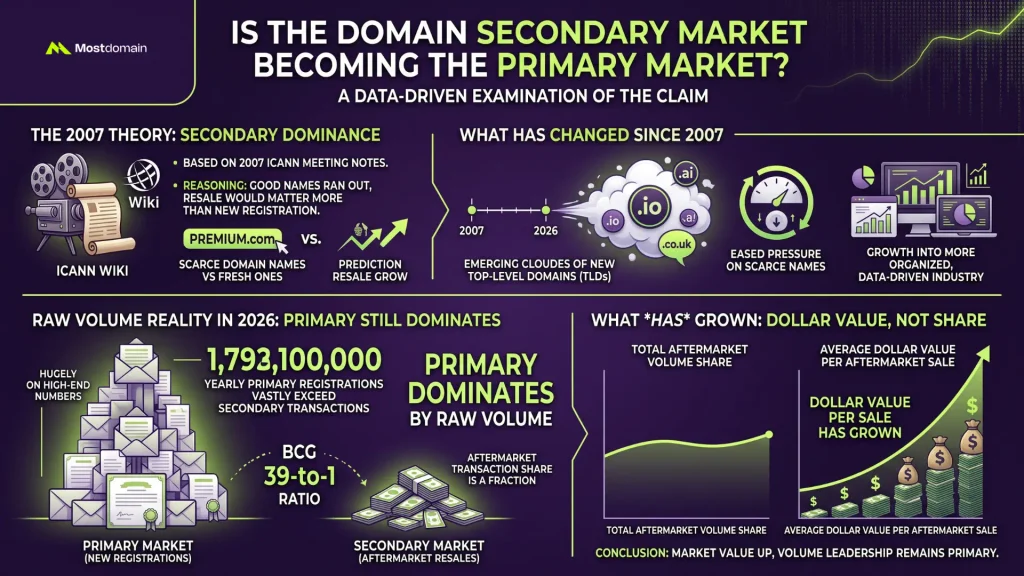
Not by volume, based on the numbers available. It’s a claim worth examining, though.
The ICANN Argument From 2007
Back in 2007, ICANN meeting notes floated an interesting idea.
- Discussion at the time suggested the secondary market was becoming the dominant channel.
- The reasoning: as good names ran out, resale would matter more than new registration.
- This argument gets cited occasionally in past domain industry writing, including on ICANNWiki.
- It’s a fair theory, but one that needs checking against actual data.
What’s Changed Since Then
New extensions launched by the dozens since 2007, easing pressure on scarce names.
- Hundreds of new top-level domains arrived after ICANN’s 2012 expansion program.
- .io, .ai, and country-code extensions gave buyers fresh alternatives to old .com scarcity.
- Domain investing also grew into a more organized, data-driven industry over that span.
- None of that erased demand for aftermarket names, but it did add options.
Does This Argument Hold Up in 2026
Not really, at least not on raw volume. The primary market still dominates by a wide margin.
- BCG’s 39-to-1 ratio, while from 2020, shows the scale gap clearly.
- NameBio’s 2025 aftermarket figures look large. Yearly primary registrations, across all extensions, dwarf them.
- These datasets aren’t perfectly comparable, since methods and coverage differ.
- Still, nothing in available data suggests the aftermarket has overtaken new registrations.
- What grew is the dollar value per sale. Its share of total transactions hasn’t.
When Should You Buy From Each Market?
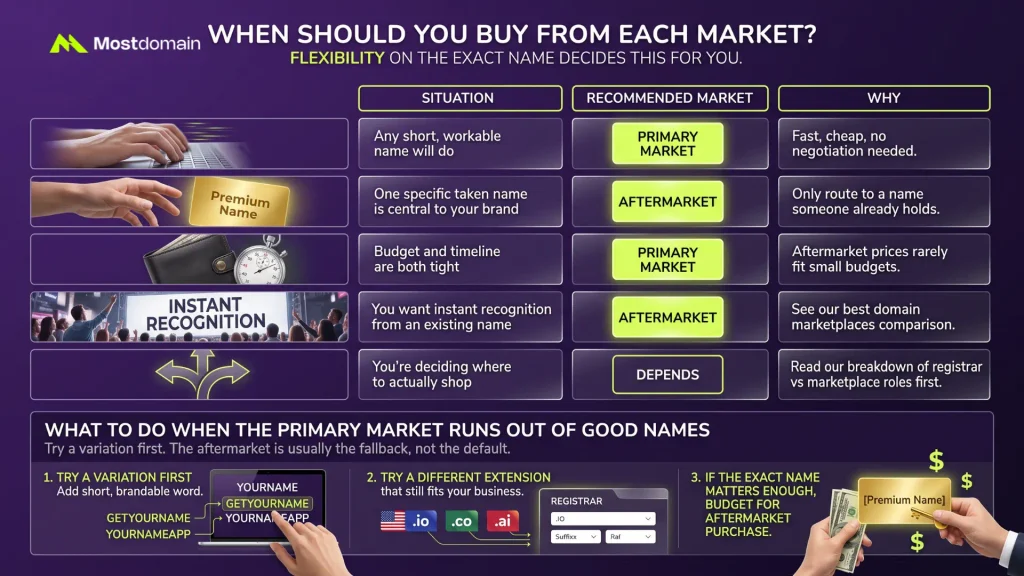
Flexibility on the exact name is usually what decides this for you.
Decision Table by Situation
Your budget and how attached you are to one exact name matter most here.
| Situation | Better market | Why |
| Any short, workable name will do | Primary | Fast, cheap, no negotiation needed |
| One specific taken name is central to your brand | Aftermarket | Only route to a name someone already holds |
| Budget and timeline are both tight | Primary | Aftermarket prices rarely fit small budgets |
| You want instant recognition from an existing name | Aftermarket | See our best domain marketplaces comparison |
| You’re deciding where to actually shop | Depends | Read our breakdown of registrar vs marketplace roles first |
What to Do When the Primary Market Runs Out of Good Names
Try a variation first. The aftermarket is usually the fallback, not the default.
- Add a short, brandable word before or after your ideal name.
- Try a different extension that still fits your business.
- If the exact name matters enough, budget for an aftermarket purchase.
- Our full walkthrough on buying a domain name covers that path.
FAQ
Is the aftermarket the same as the secondary market?
Yes, these two terms describe the exact same resale market.
- Industry writing uses both terms interchangeably, including past ICANN materials.
- Some sources also call it the domain resale market.
- All three phrases point to names an existing owner is reselling.
Why are aftermarket domains so much more expensive?
Because one seller, not a registry, decides what the name is worth.
- Scarcity plays the biggest role. Only one person owns the exact name.
- BCG found typical resales run 150 to 200 times a registration fee.
- Brandability and existing traffic push some prices even higher.
Can a registry premium domain be considered aftermarket?
Not at the first sale, since no prior owner exists yet.
- Registries price these names above standard fees, but sell through registrars.
- That first sale is still technically primary market activity.
- A later resale of that same name, though, becomes an aftermarket transaction.
How many domains are sold in the primary market each year?
Tens of millions annually, based on the scale seen in past research.
- BCG counted 39 million new .com registrations in the US alone for 2020.
- Global figures across every extension run considerably higher than that.
- Exact yearly totals vary by extension and by year.
Is buying in the aftermarket riskier than registering new?
Yes, mainly because a private seller is involved instead of a registry.
- Ownership needs verifying, since anyone could list a name they don’t control.
- Escrow protects your payment, but only if you use it correctly.
- A fresh registration carries almost none of this risk.
Will the aftermarket eventually replace the primary market?
Unlikely, based on current data, though the theory has circulated for years.
- A 2007 ICANN discussion floated this exact idea.
- Current volume numbers still favor primary registrations by a wide margin.
- The aftermarket’s dollar value has grown, but its share of transactions hasn’t.
Where can I buy in each market?
Registrars handle the primary market. Marketplaces and brokers handle the aftermarket.
- Namecheap, Dynadot, and GoDaddy are common registrar choices.
- Sedo, Afternic, and Atom are common aftermarket marketplaces.
- Our full comparison of domain registrar vs domain marketplace explains the platform side.
Check the Primary Market First, Every Time
Before paying an aftermarket price, confirm the name truly isn’t available fresh.
- A quick registrar search costs nothing and takes under a minute.
- Many buyers assume a name is taken, when it’s actually sitting available.
- Save the aftermarket budget for names that genuinely have no substitute.
References
- BCG, Domain Name Secondary Market Insights
- ICANNWiki, Aftermarket
- InterNetX, What Is the Domain Aftermarket?
- NamePros, 2025 Domain Name Market Dollar Volume Trends Based on NameBio Data
- GoDaddy, Domain Aftermarket: Step-by-Step Guide for 2026