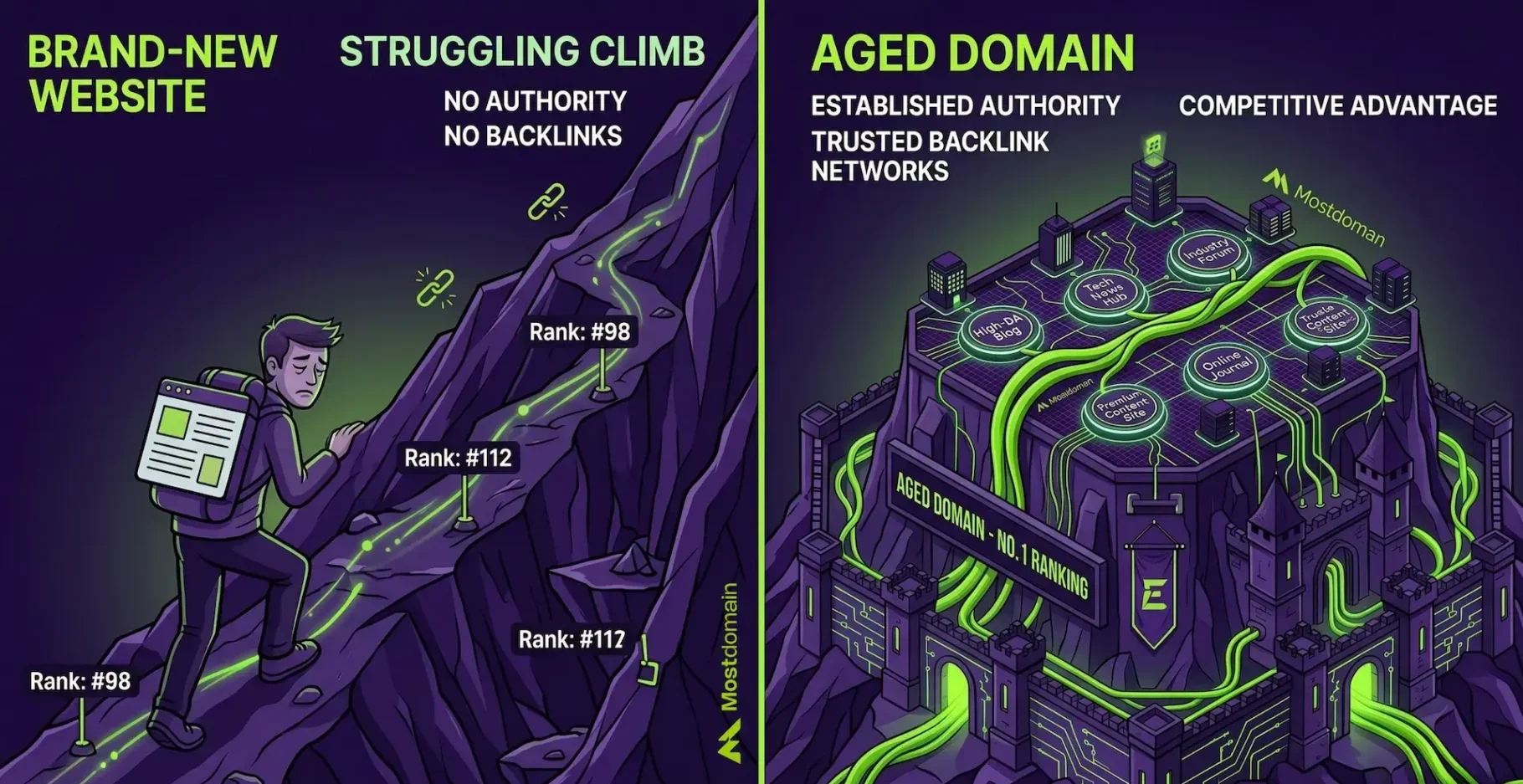
Launching a site in saturated vertical like finance, SaaS, or health feels like hitting a brick walls. Fresh domains suffer through grueling waiting periods. You might craft flawless, high-intent content, only to remain buried on page five for eternity.
The entry barrier for High KD keywords has shifted. Legacy brands hold the keys, and newcomers are ditching fresh registrations to bypass the status quo. They buy history. Why aged domains win competitive topics is no mystery, it is a calculated play for algorithmic leverage.
The Algorithmic Reality: Historical Authority is Non-Negotiable
Modern core updates treats trust as a long-term asset, not a badge you earn overnight. Algorithms now scrutinize the digital footprint of a site, rewarding longevity while treating unproven domains with extreme suspicion.
| Algorithmic Factor | Brand-New Domain | Premium Aged Domain |
| Historical Data | A void. Zero signals. | Documented, multi-year indexing history. |
| Entity Trust | Viewed as a security risk. | Carries a legacy of proven, reputable signals. |
| SERP Treatment | Faces intense skepticism. | Operates on established, trusted ground. |
3 Technical Reasons Aged Domains Dominate High-KD Keywords
Bypassing the Sandbox New sites face a probation phase.
Google restricts their reach for months regardless of quality. Crawl budgets stay low, and indexing crawls to a halt. Aged domains skip this. Since search bots already recognize the architectural layout, your new content gains immediate visibility. You trade months of waiting for weeks of traction.
Leveraging Pre-Existing Backlink Equity Links are the internal currency of search.
Securing top-tier coverage costs thousands and takes months of grueling outreach. When you secure a premium aged domain, you inherit its backlink portfolio. That inherited authority feeds your new content instantly, providing the raw power needed to topple entrenched competitors.
Retention of Topical Authority Search engines map entities within their Knowledge Graph.
If an aged domain was historically active in your niche, the algorithm already correlates that domain with your specific industry entities. This residual relevance grants you an immediate ranking head start that fresh sites simply cannot replicate.

Resource Comparison
| Metric | Fresh Domain Strategy | Premium Aged Domain Strategy |
| Time to Rank (Page 1) | 12 – 18+ months | 2 – 4 months |
| Link Building Costs | Exorbitant; ongoing | Included in acquisition |
| Crawl Budget | Minimal; restrictive | High; immediate response |
| Risk of Failure | Massive | Minimal; proven foundation |
When Should You Switch to an Aged Domain Strategy?
Fresh domains suffice for low-stakes, local projects. Pivot to aged assets if:
- You target KD 50+ keywords.
- You clash with legacy media giants.
- Your ROI window is under six months.
- You operate in YMYL sectors where trust acts as the primary gatekeeper.
Time is your most precious commodities. Fighting for visibility with a fresh domain wastes budget and stalls progress. By acquiring an established asset, you inherit the authority required to compete. Visit mostdomain to select a foundation that eliminates the sandbox and accelerates your growth.
FAQs
Does age guarantee top rankings?
No. Think of these as force multipliers. Why aged domains win competitive topics is simple: they provide the foundation. You still need elite content and surgical technical optimization to claim the top spot.




Is it the age or the links?
History dictates performance. A dormant site is worthless. Real value arises from a consistent, active footprint of quality, organic backlinks.
Can these domains still trigger the Sandbox?
Yes. Operator error kills authority. If you pivot to irrelevant topics or publish spam, the algorithm will penalize you. Maintain professional standards to preserve your standing.
What if the niche doesn’t align?
Relevance is absolute. Migrating a culinary blog into a crypto hub destroys equity. Google discounts links that lack semantic alignment. Stick to your vertical.
Build on the site or redirect?
Host your primary project directly on the aged domain. 301 redirects are scrutinized heavily in current updates; they often lose power.
How do I verify a safe link profile?
Scour every anchor text. Look for red flags like pharma or gambling spam. High-level vetting is exactly why aged domains win competitive topics when handled by pros. Use platforms like mostdomain.com to avoid toxic baggage.
Is the upfront cost worth it?
Do the math. Compare the price of an asset to two years of failed SEO, retainer fees, and wasted labor. You aren’t just buying a domain; you are buying speed.
References
- Search Engine Journal. (2024). Google Ranking Factors: What Actually Matters.
- Backlinko. (2024). Google Ranking Factors: The Complete List.
- Backlinko. (2024). What Is Topical Authority?
- HubSpot Blog. (2024). What Is Topical Authority and Why Does It Matter for SEO?
- Search Engine Land. (2024). Google’s Helpful Content System Explained.
- Ahrefs Blog. (2024). What Is Link Equity and Why Is It Important?